


WalkMePal: Museum companion concept
WalkMePal
Museum visitors move between objects, labels, floor plans and audio guides, often losing the thread of what first caught their attention. They also arrive with different interests, time limits and access needs. My 0-to-1 task was to connect planning, orientation and interpretation into a visit companion that supports a personal route through the collection without prescribing every moment of the visit.
Back to LabMuseum companion concept
Visit companion UX / AR navigation / UI
AI + Figma
Visual Identity
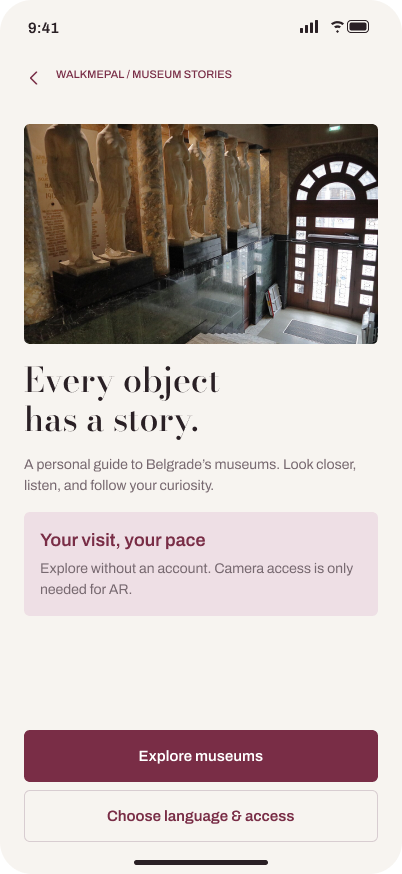
I wanted WalkMePal to have a little of the museum catalog and a little of a good conversation. Burgundy, dark ink and a warm off-white give the identity cultural weight without borrowing the stiffness of an institutional brochure. The palette can sit beside an archaeological object, a contemporary artwork or a room photograph and still feel like the same companion.
Bodoni Moda supplies the editorial drama; Archivo does the everyday work of guiding, labeling and explaining. I used that contrast to distinguish a moment worth pausing over from information someone needs while moving. The identity respects the collection, but it is happy to ask a question. A museum visit should leave room for a raised eyebrow, a second look and an unexpected detour.
- BURGUNDY, INK AND WARM OFF-WHITE
- EDITORIAL EXPRESSION WITH PRACTICAL WAYFINDING
- A CONSISTENT FRAME AROUND DIFFERENT COLLECTIONS
- CULTURAL CHARACTER WITHOUT INSTITUTIONAL DISTANCE
Colors
#2A2025 #792D46 #F7F4F0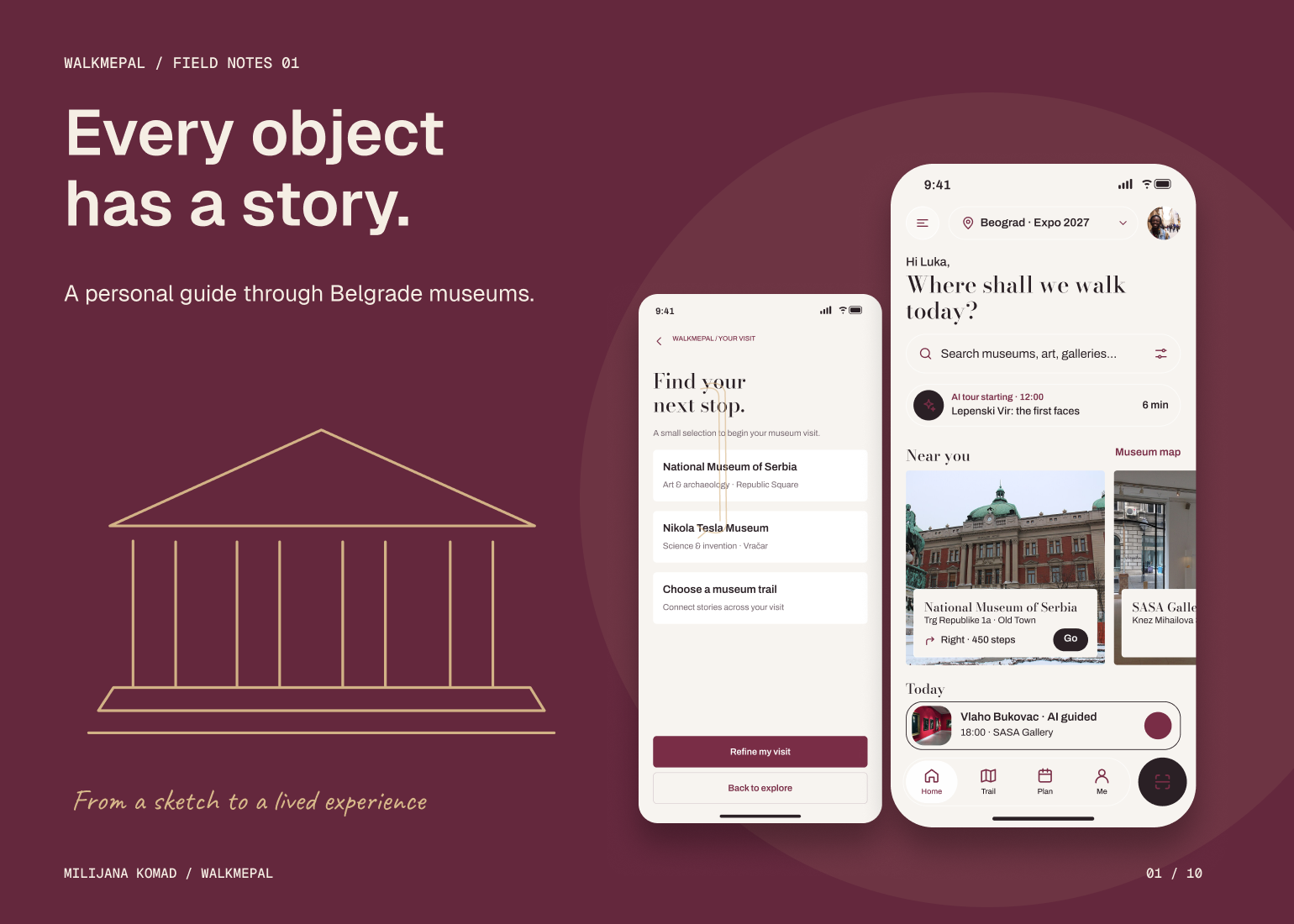
The Solution
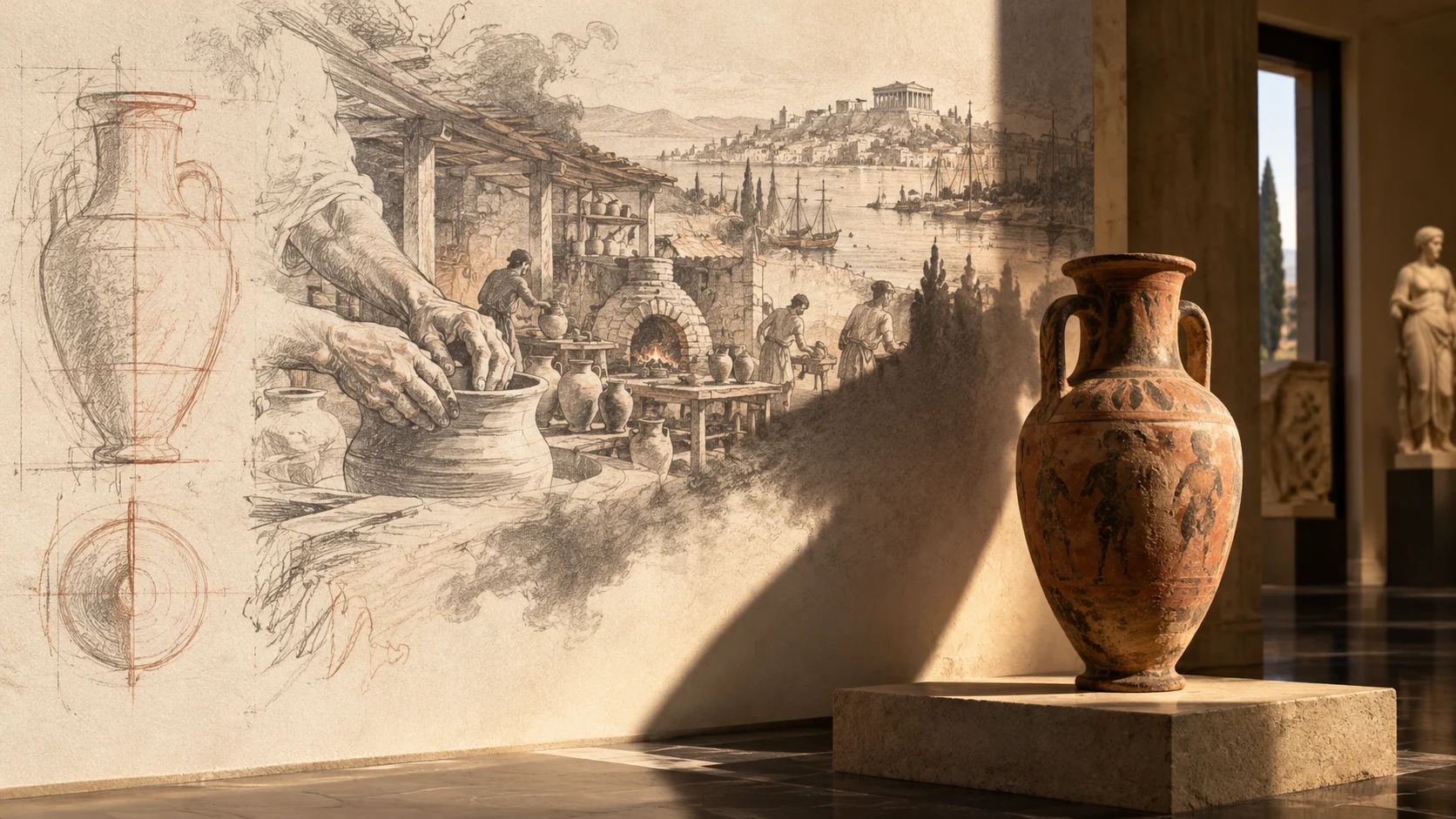
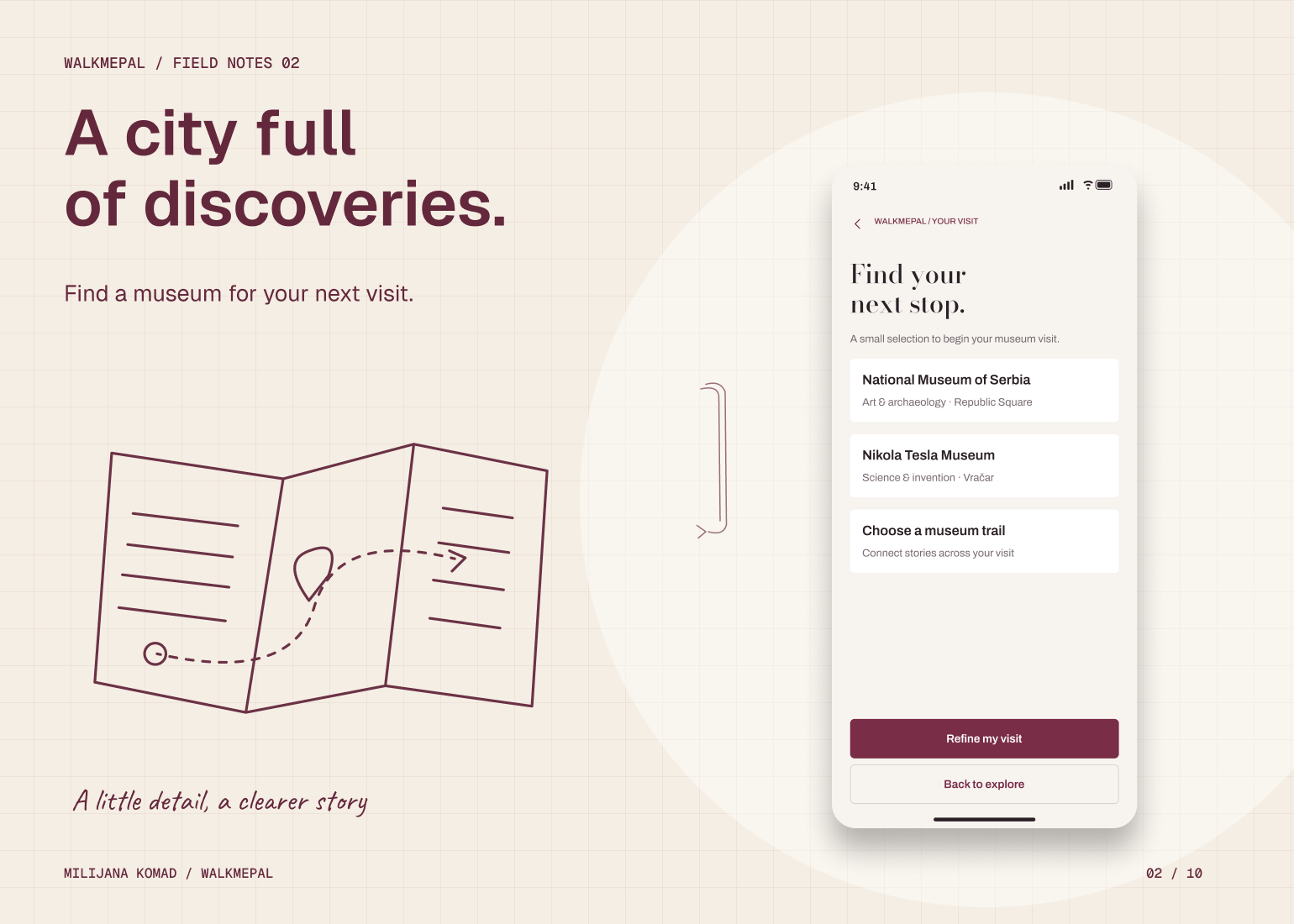
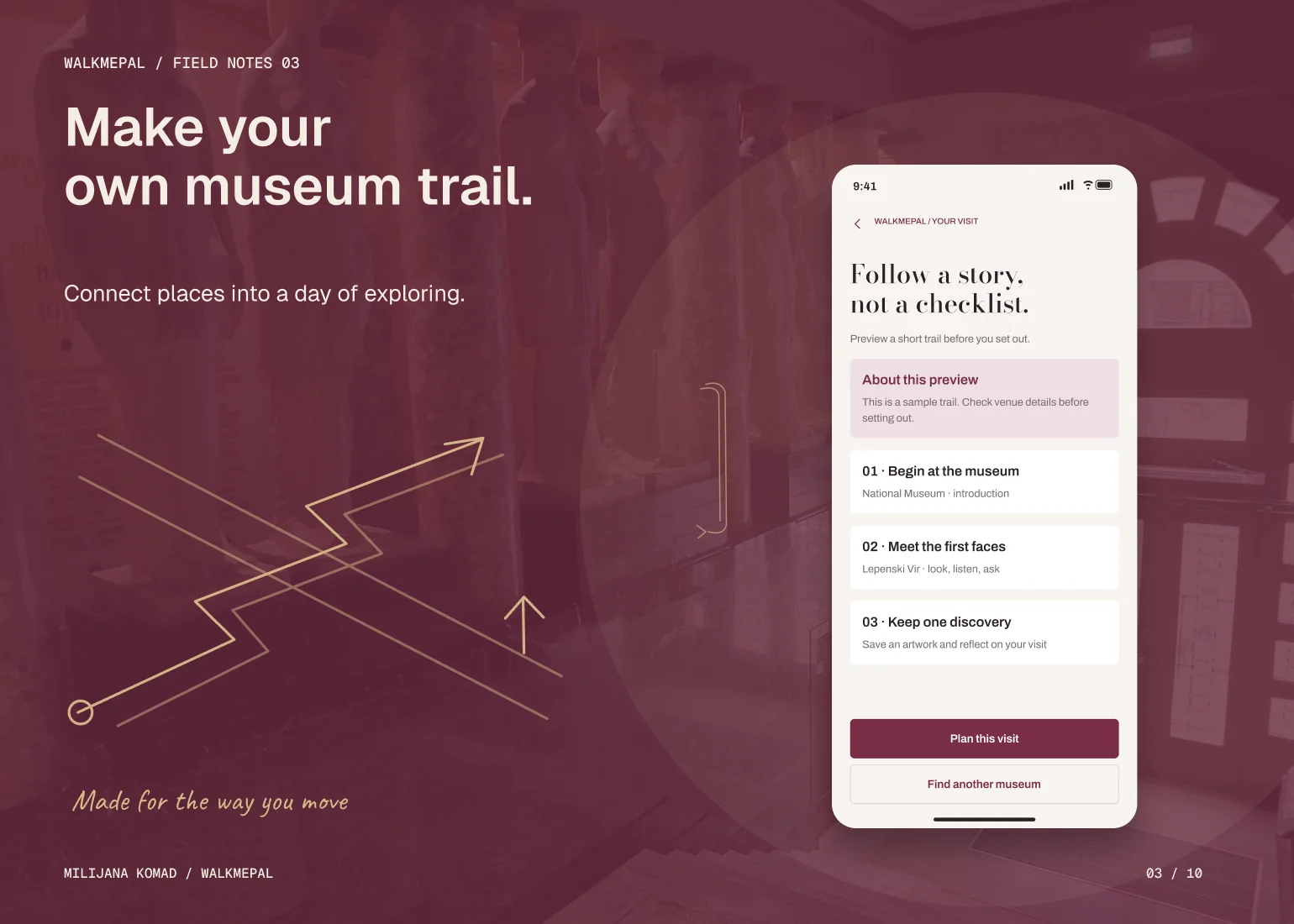
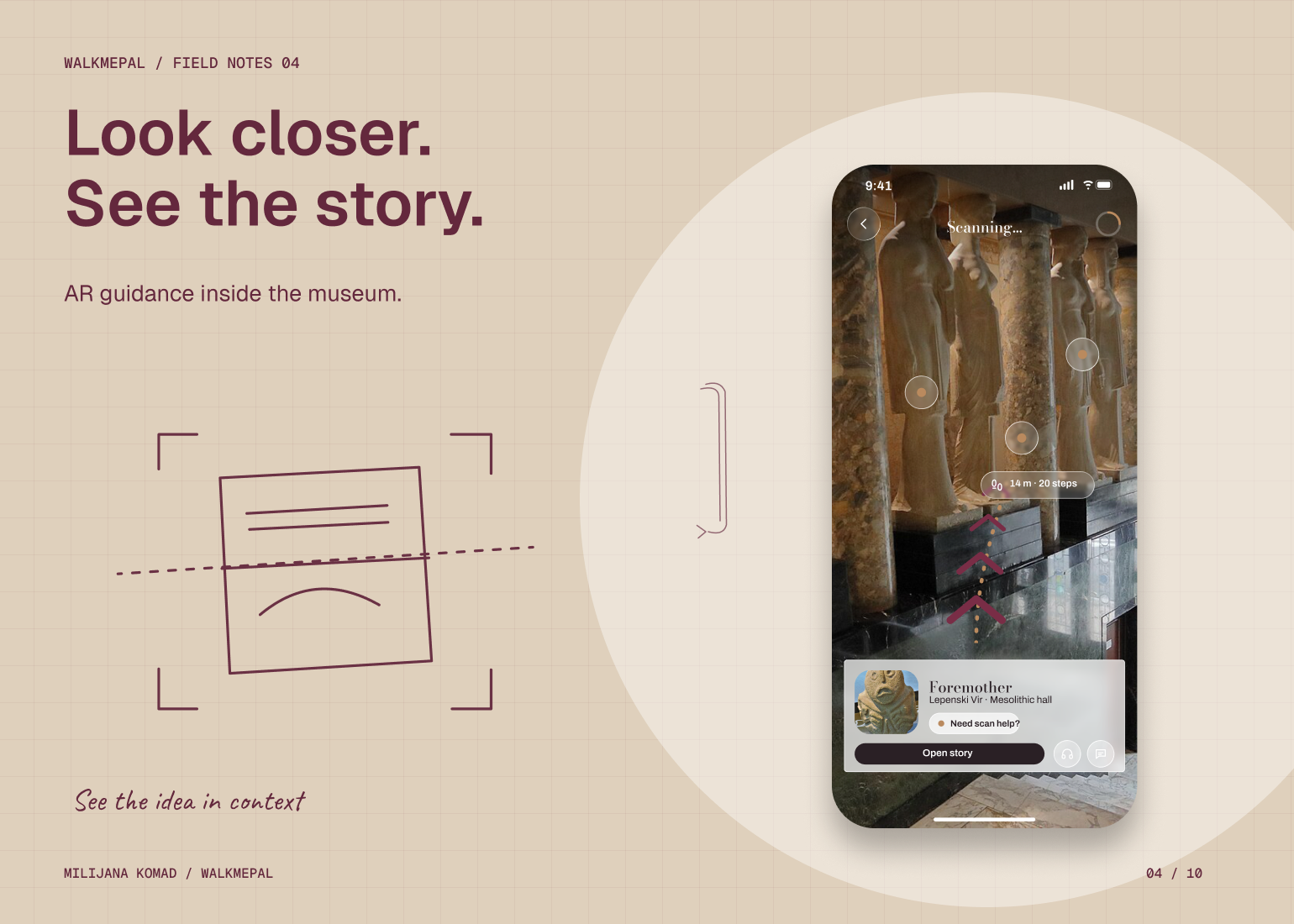
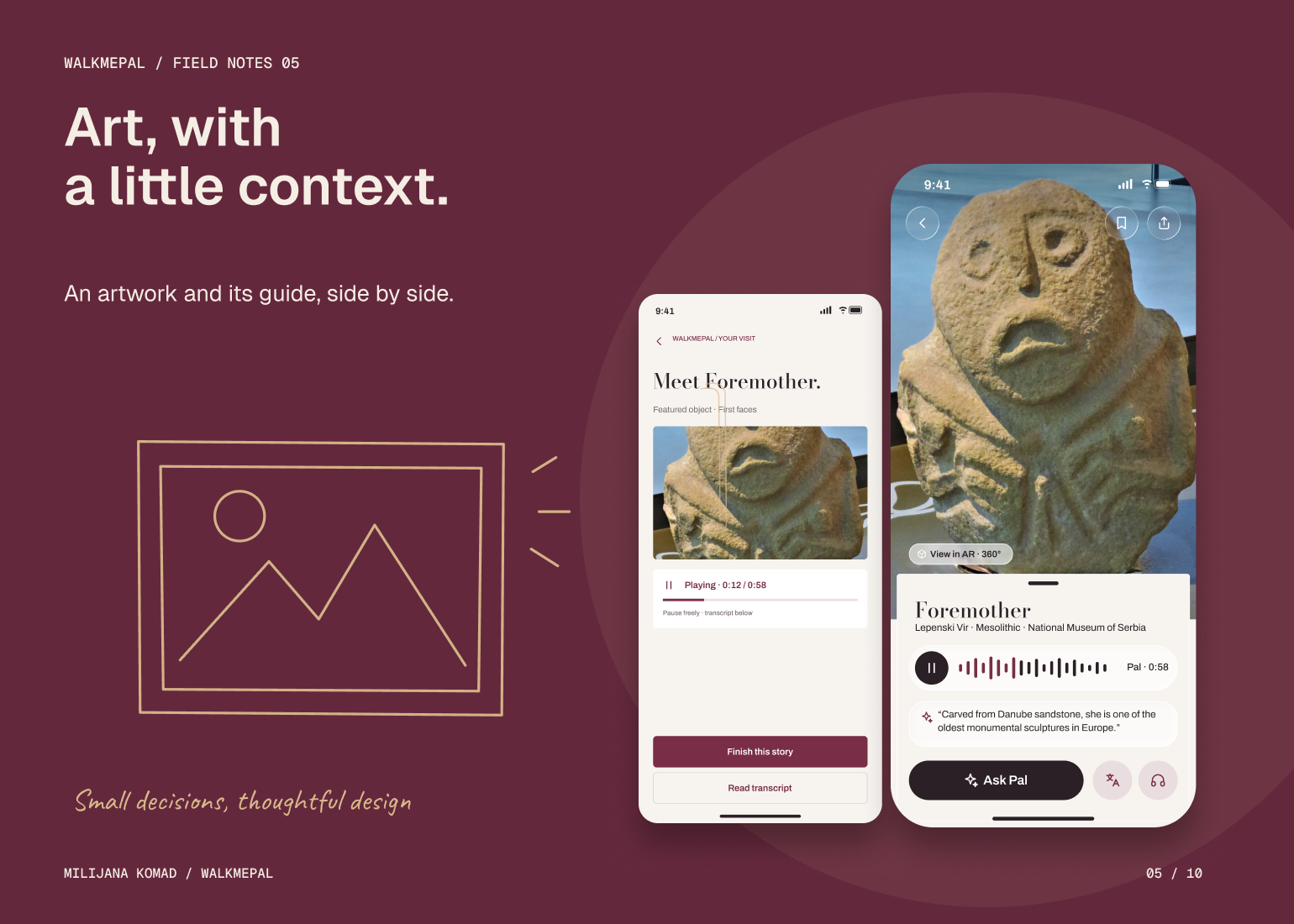
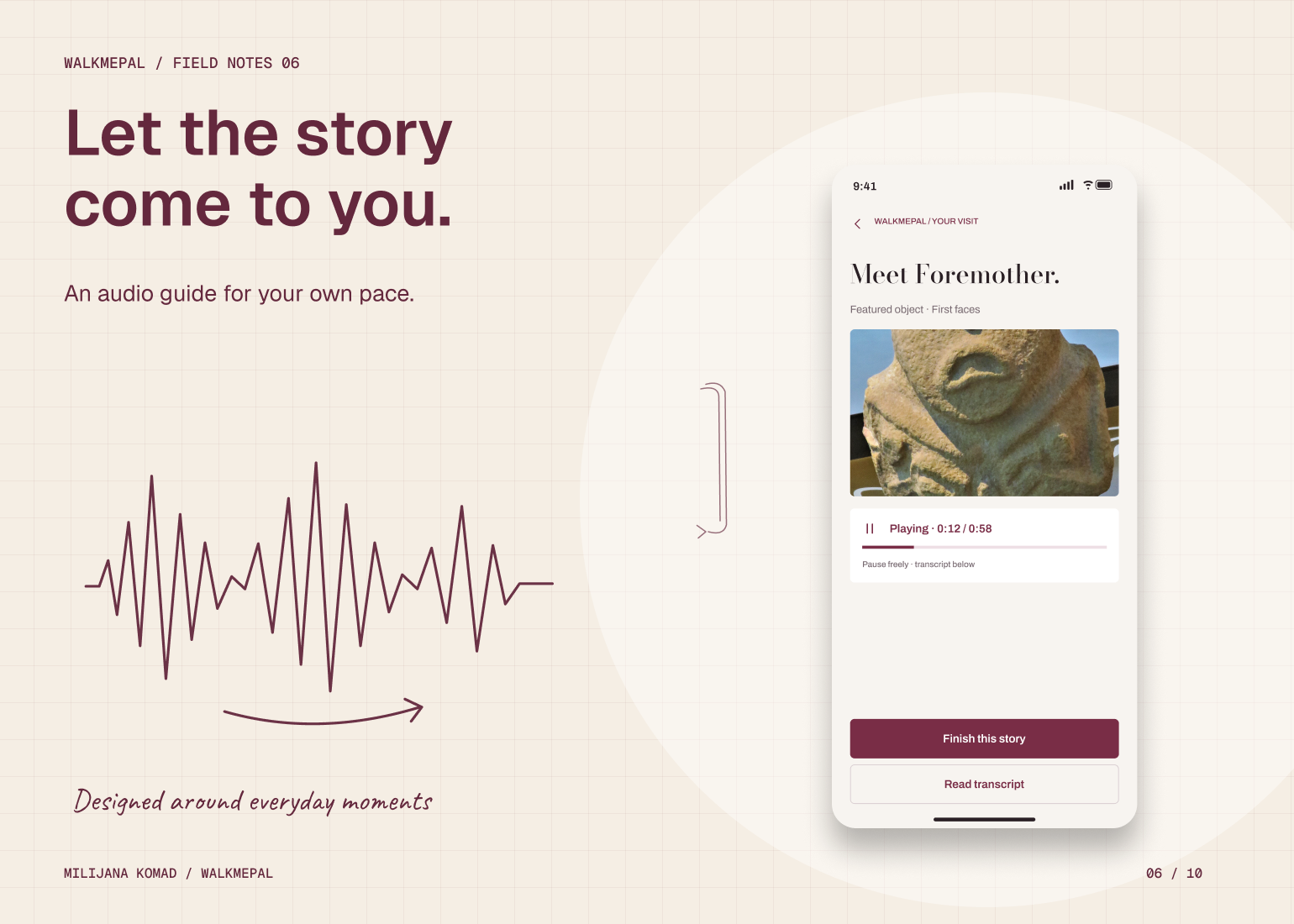
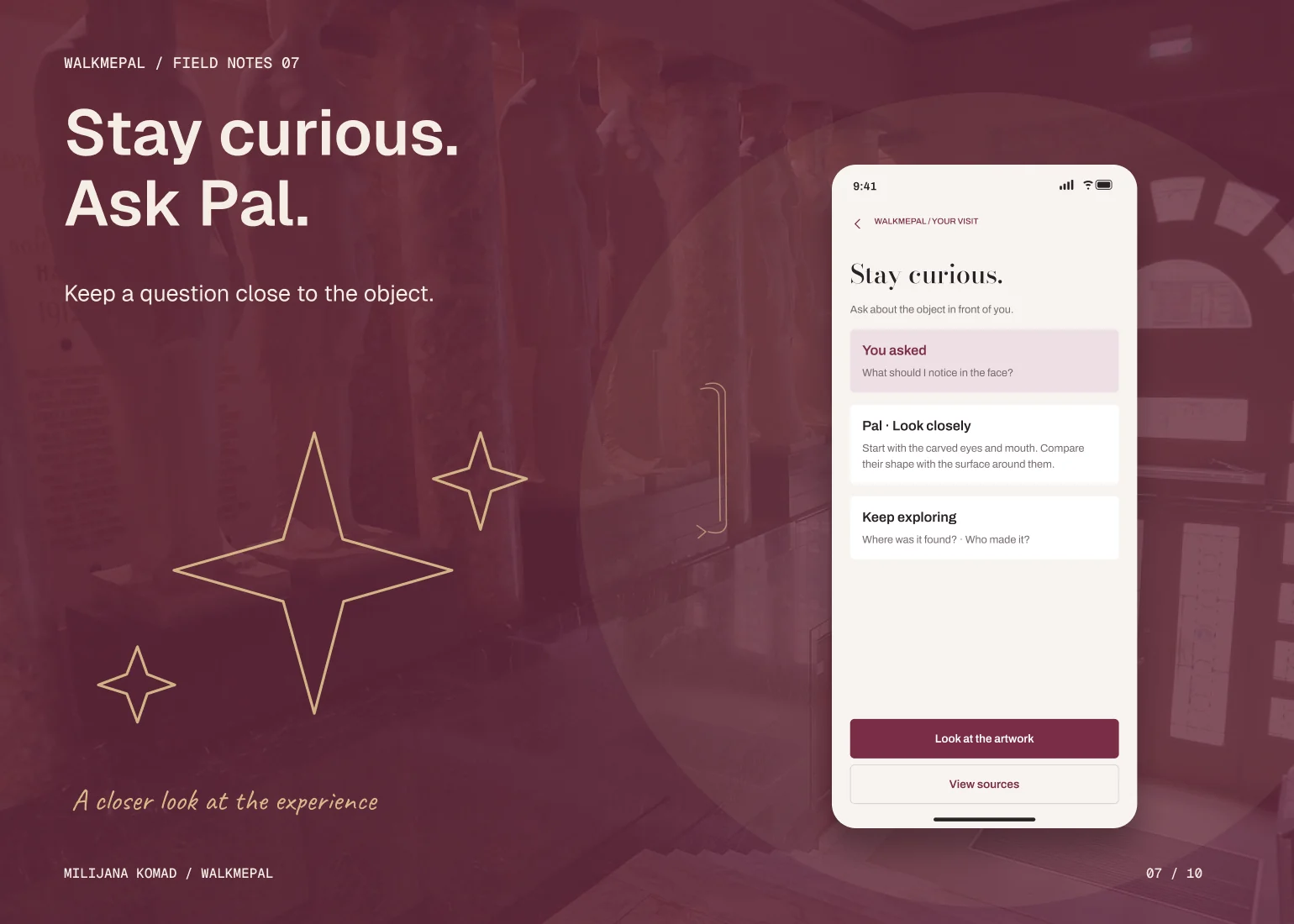
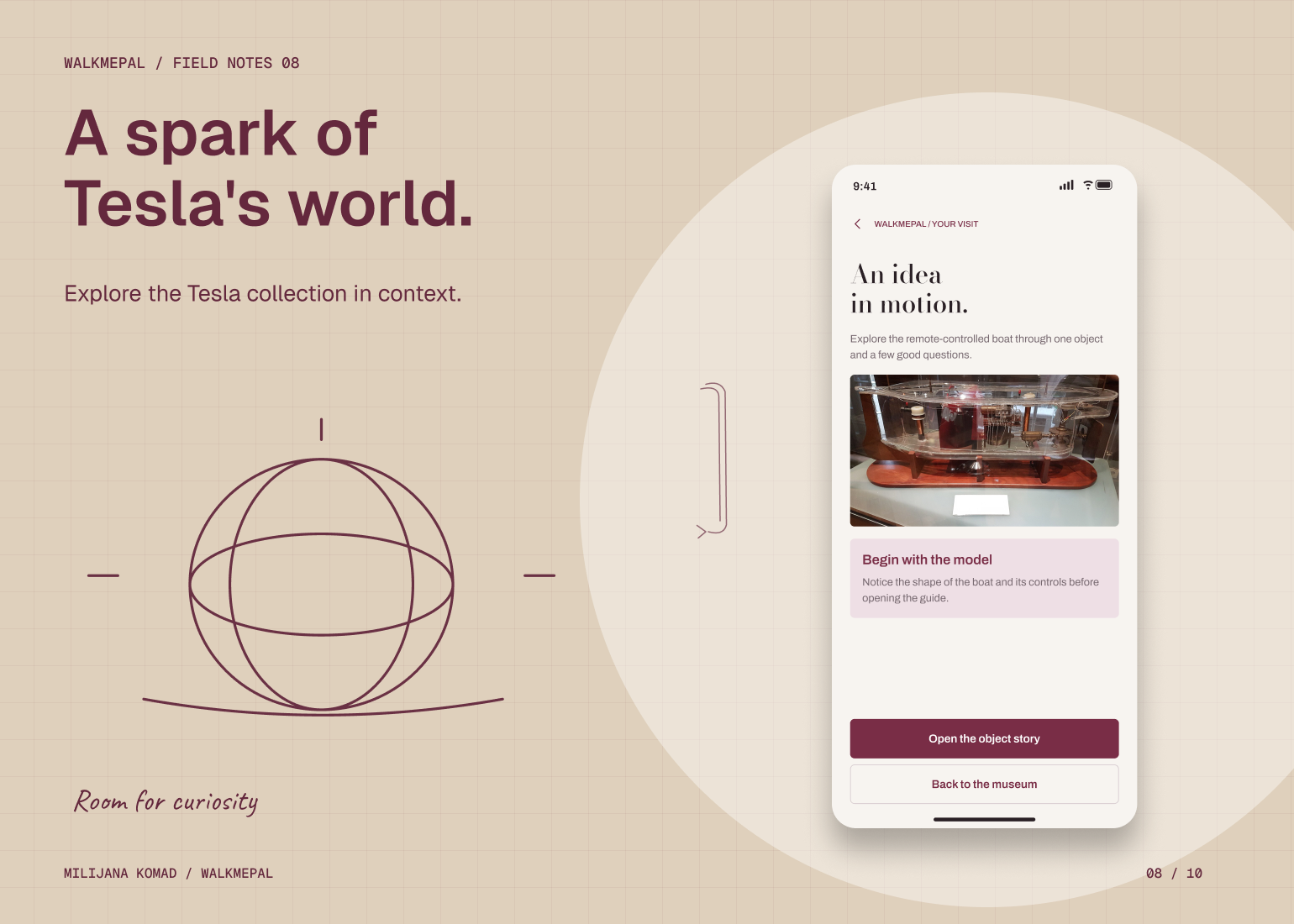
I used the visit as the main organizing unit, connecting museum discovery and trail planning to the experience inside a venue. Object recognition and AR navigation provide contextual entry points, while the object guide brings the story, audio and related questions together. This keeps interpretation close to the work instead of requiring a separate search through guide content.
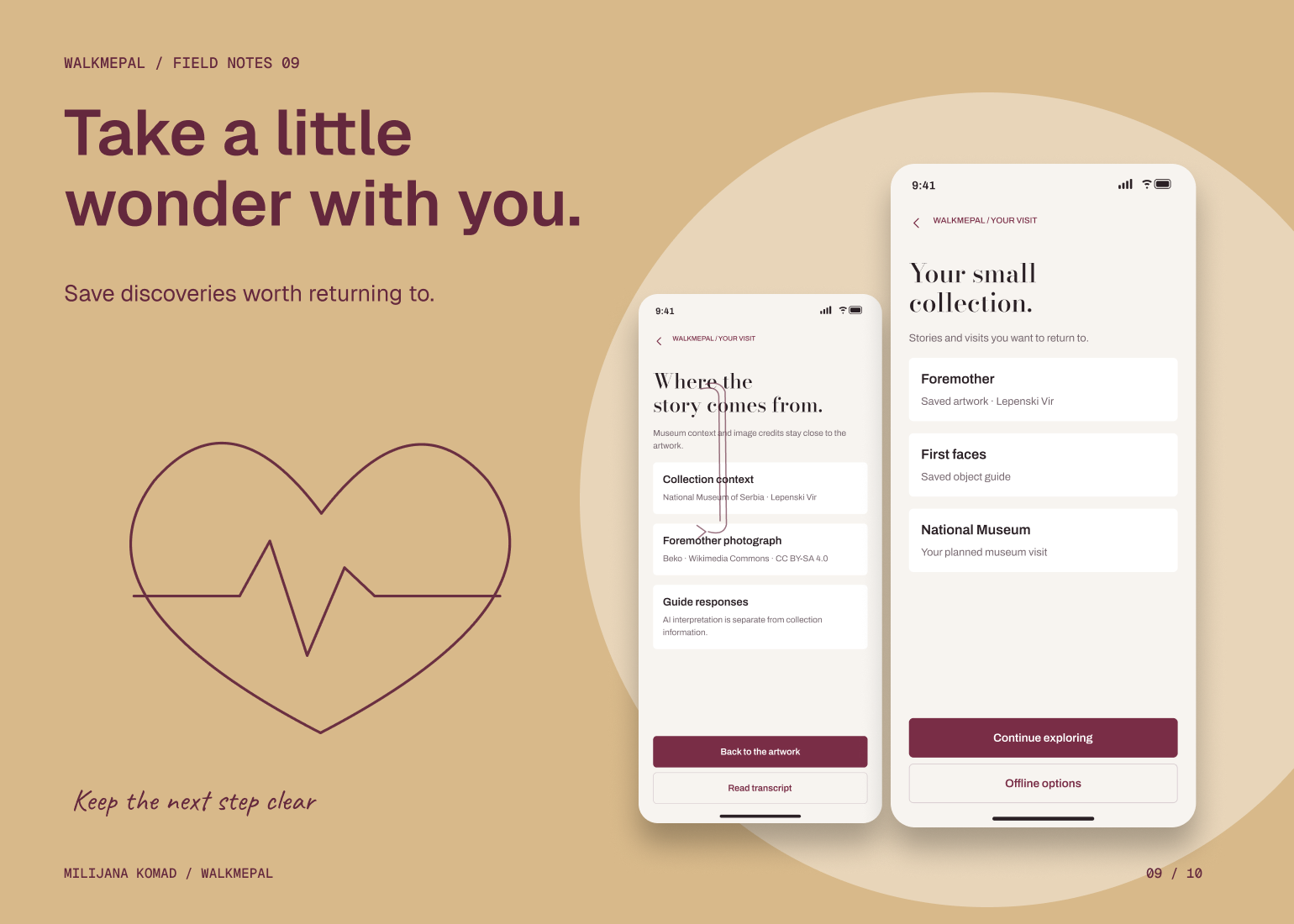
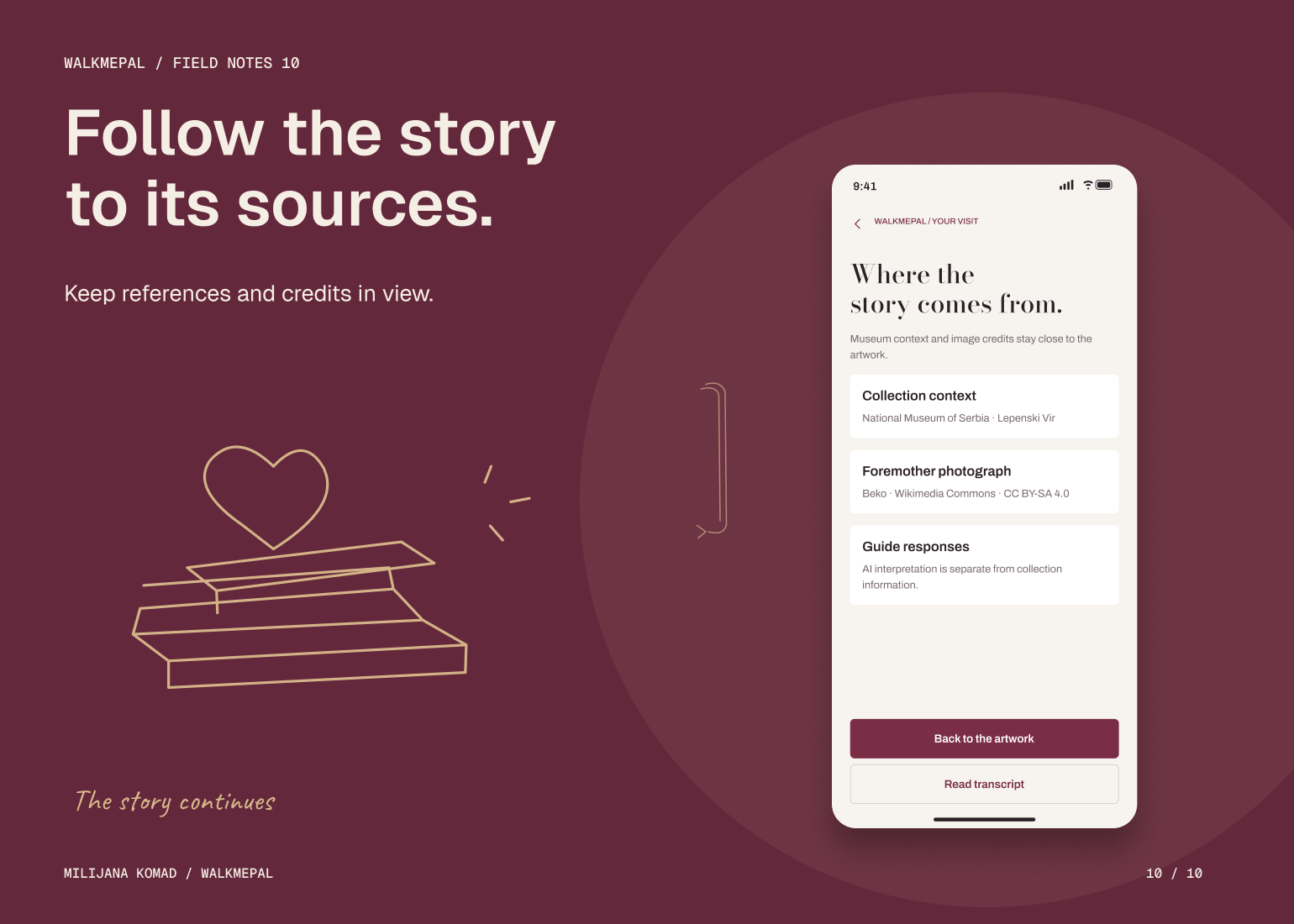
I gave listening, reading and asking Pal distinct but connected states, including a visible route to references and credits. Saved discoveries extend the visit beyond the room; offline, unrecognized-object and accessibility flows address interruptions and different ways of exploring. The solution preserves continuity across these modes, so the interface can offer direction while leaving the visitor free to choose what deserves their attention.