


NFT digital: Marketplace app concept
NFT digital
A digital-art marketplace combines two very different jobs: discovering creative work and navigating a transaction. When those layers are presented with equal urgency, artwork loses its context and important actions become harder to follow. My 0-to-1 task was to define connected collector and creator journeys, making room for artistic expression while giving auctions, wallet connection and publishing a clear structure.
Back to LabMarketplace app concept
Marketplace UX / Auction flows / UI
AI + Figma


Visual Identity
The artwork already brings its own color, texture and personality. I gave NFT digital an identity that knows when to step aside: near-black, an almost-white surface and a decisive cobalt blue. That blue provides a recognizable thread through actions and navigation without asking every piece in the marketplace to share the platform's aesthetic.
Epilogue gives the brand its graphic confidence; SF Pro keeps the interface detail controlled. I used clean framing and a clear separation between artwork, information and action so the collection can change without the product losing its structure. The identity has enough presence to be remembered and enough discipline to host someone else's work. For a creative marketplace, I think both are part of good taste.
- A GALLERY-LIKE BASE, A COBALT SIGNATURE
- GRAPHIC HEADLINES, COMPOSED INTERFACE TYPE
- ARTWORK FIRST IN THE VISUAL HIERARCHY
- CONSISTENT FRAMING FOR DIFFERENT CREATIVE VOICES

Colors
#19191C #3457D5 #F5F5F2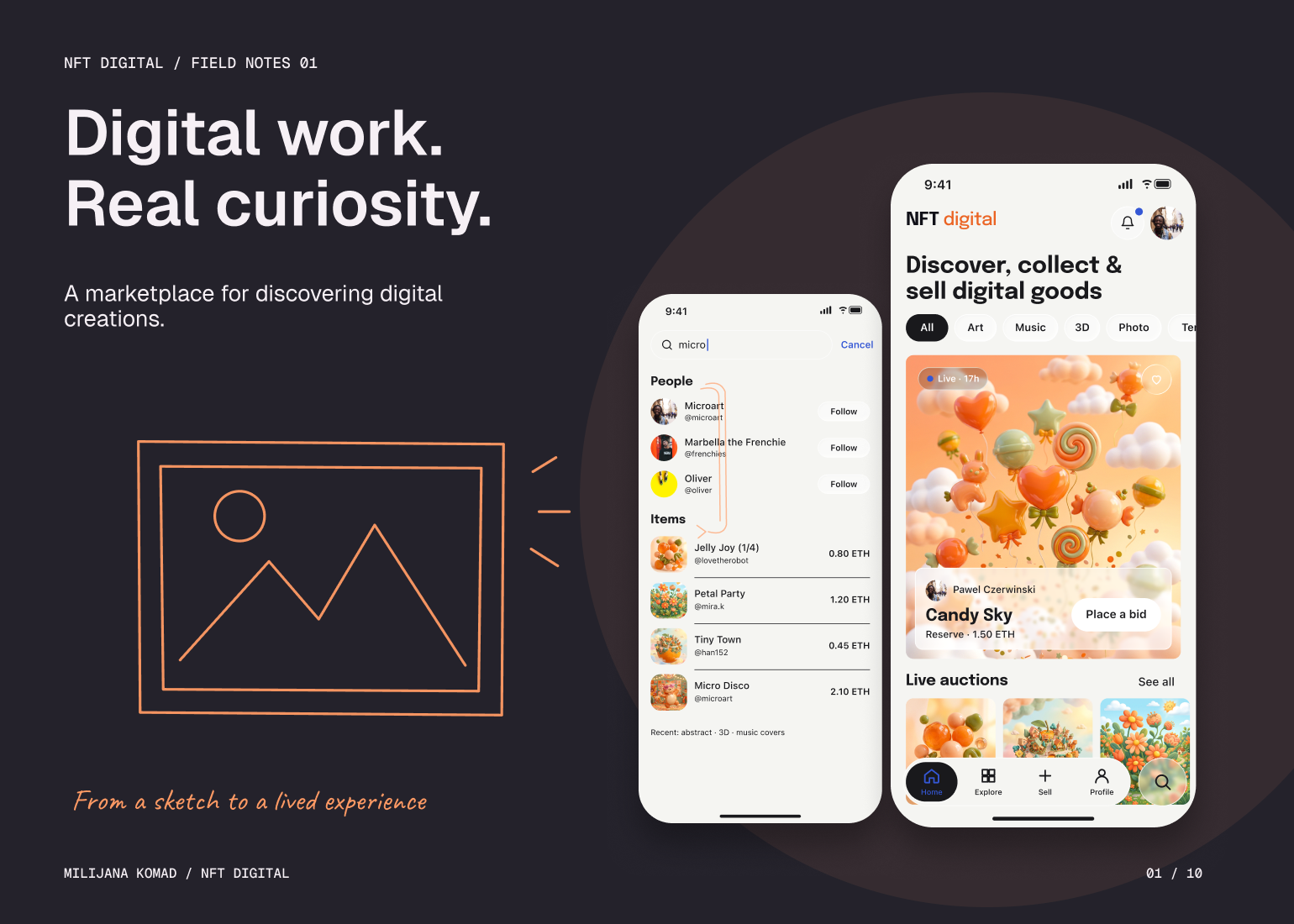
The Solution
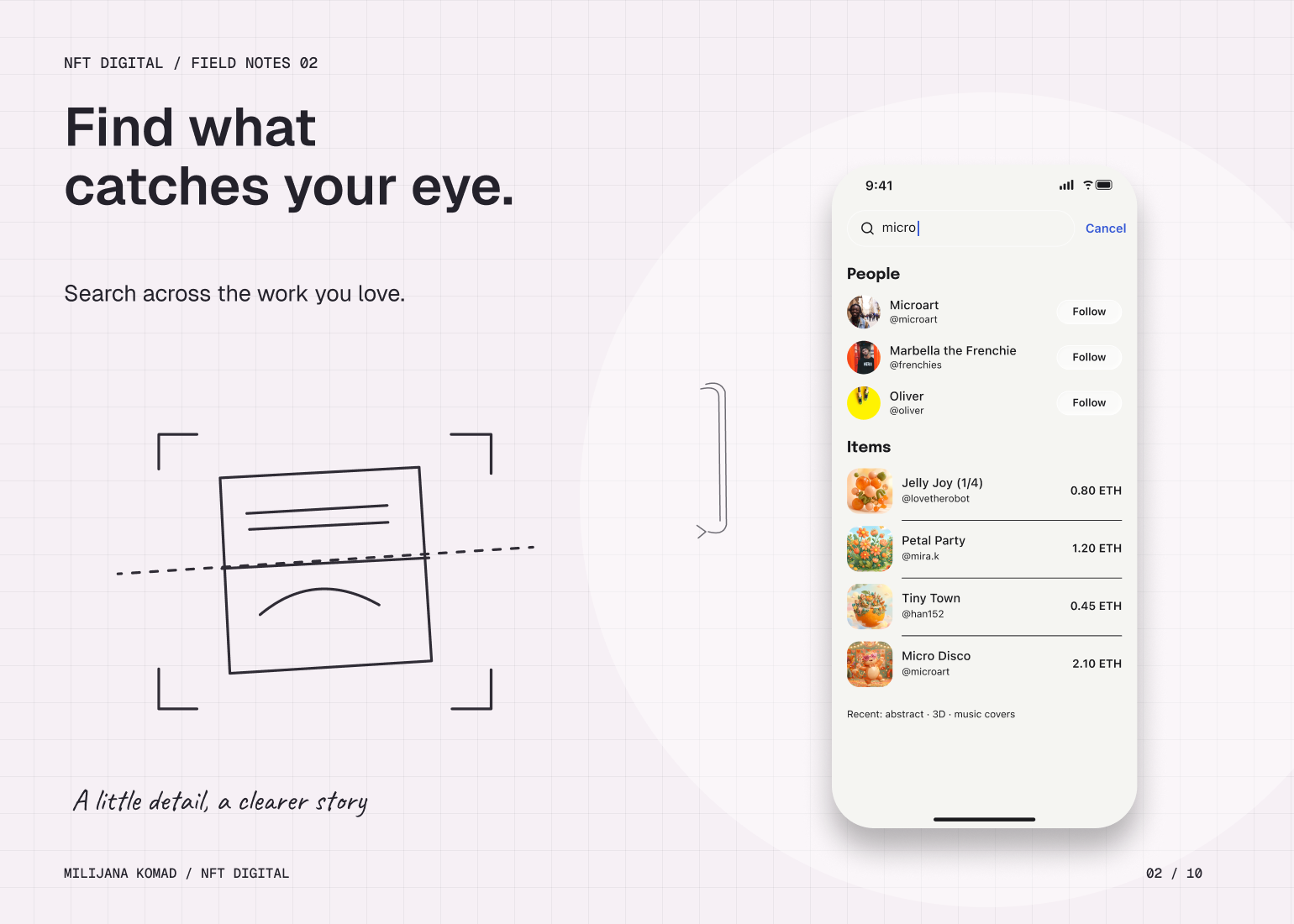
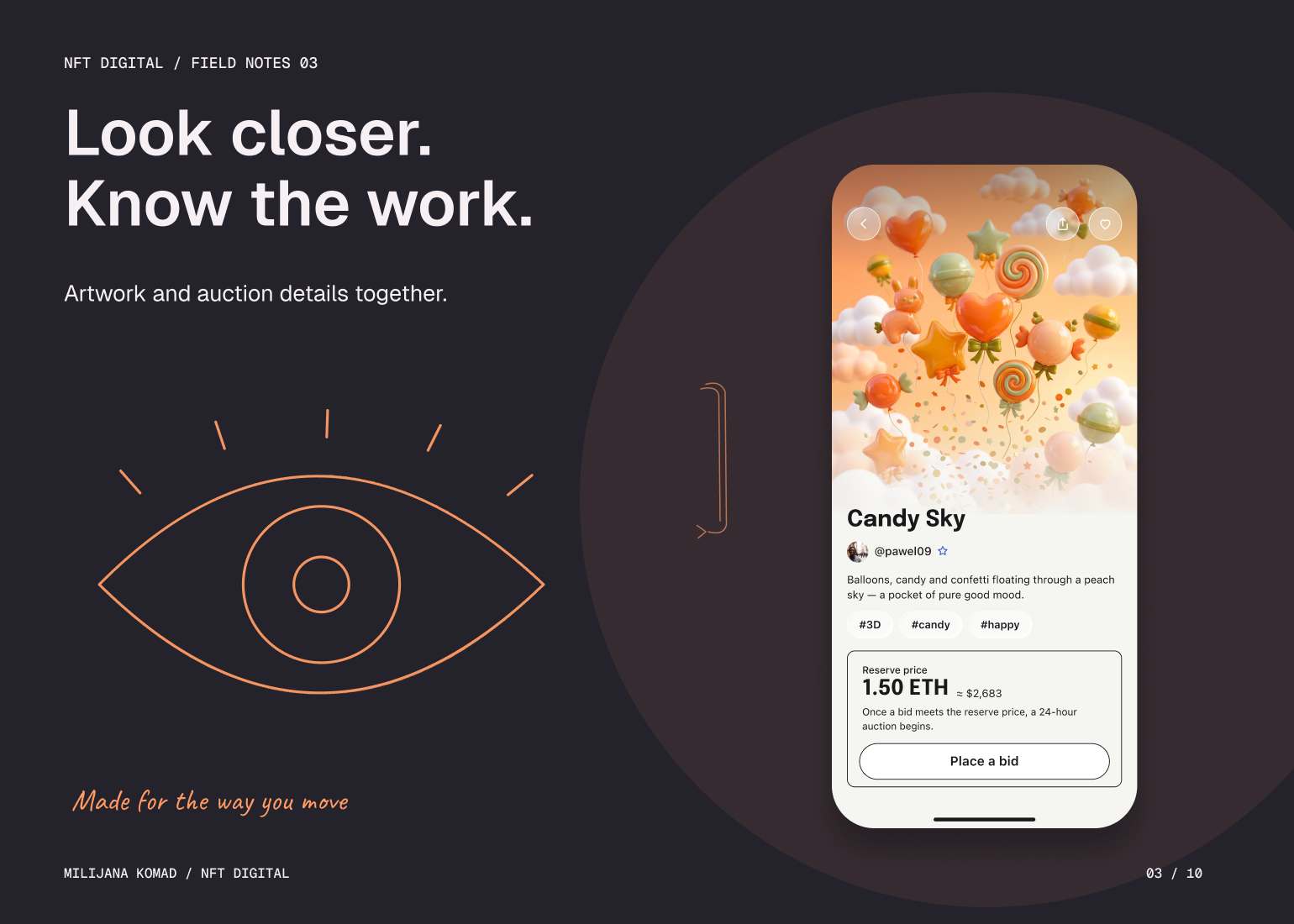
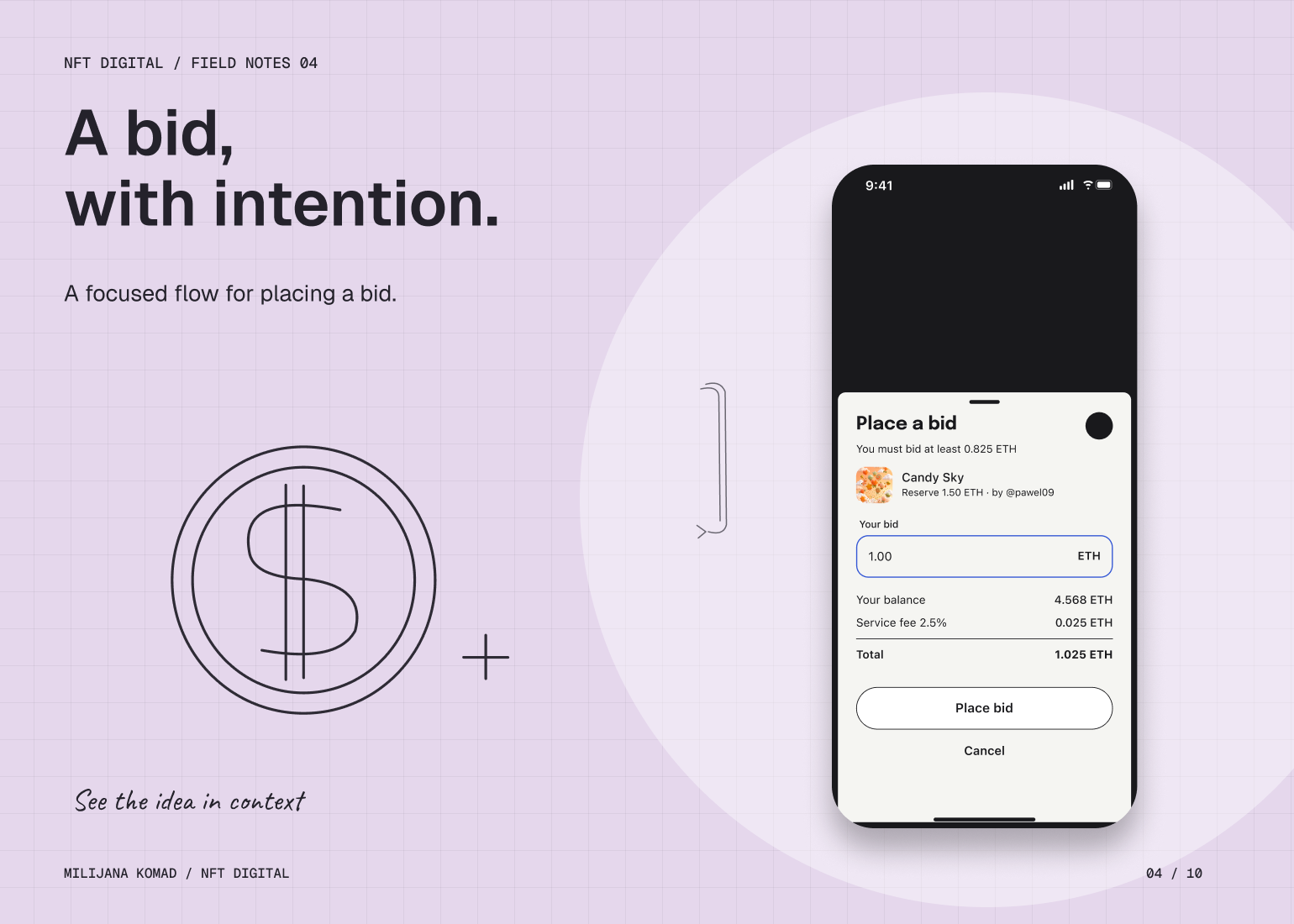
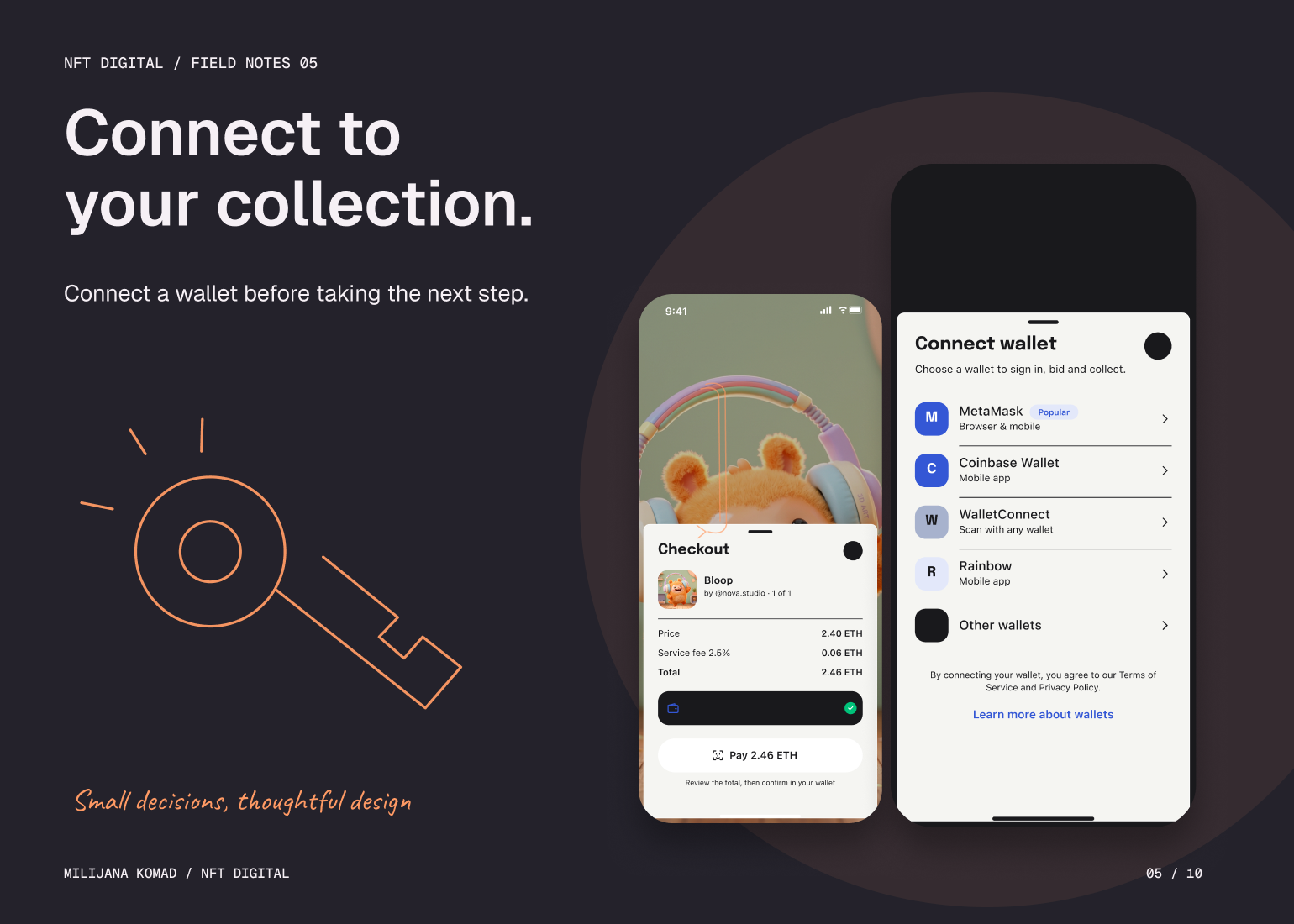
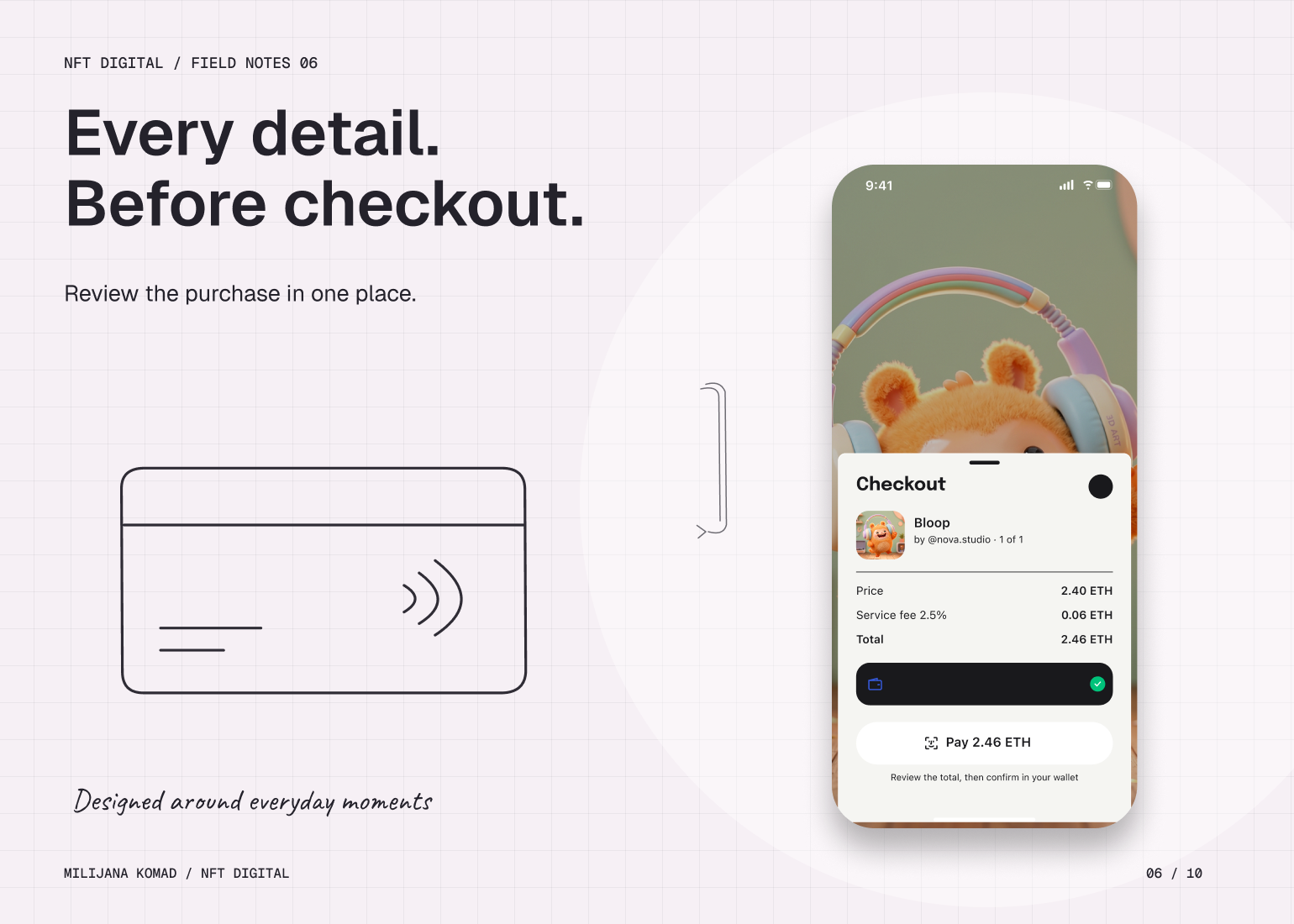
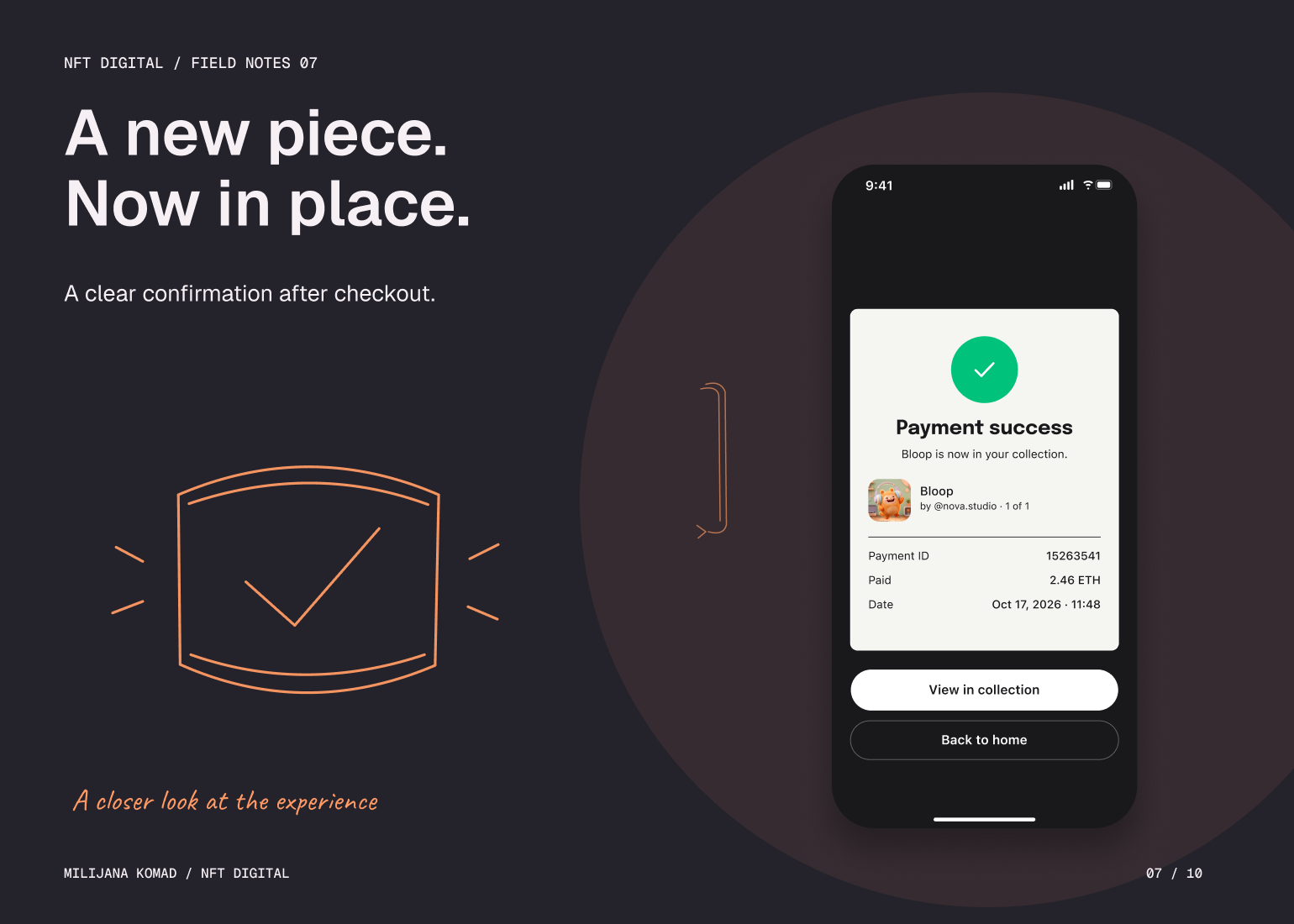
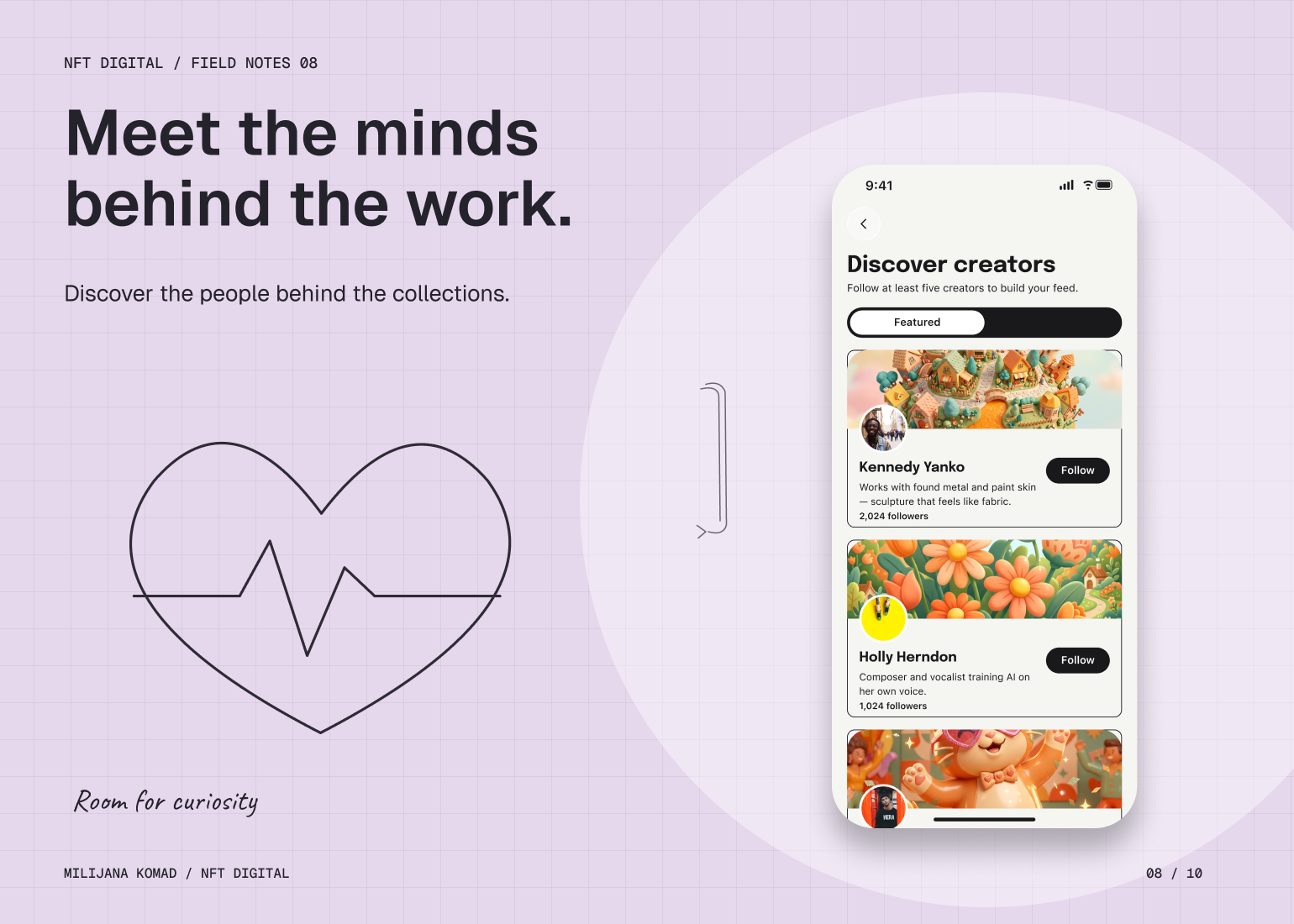
I separated browsing from transactional commitment. Artwork and creator information establish context first; auction details and bidding actions become more prominent as someone moves toward a decision. Wallet connection, bid entry, review and confirmation have distinct states, making the sequence visible instead of crowding every requirement into the artwork view.
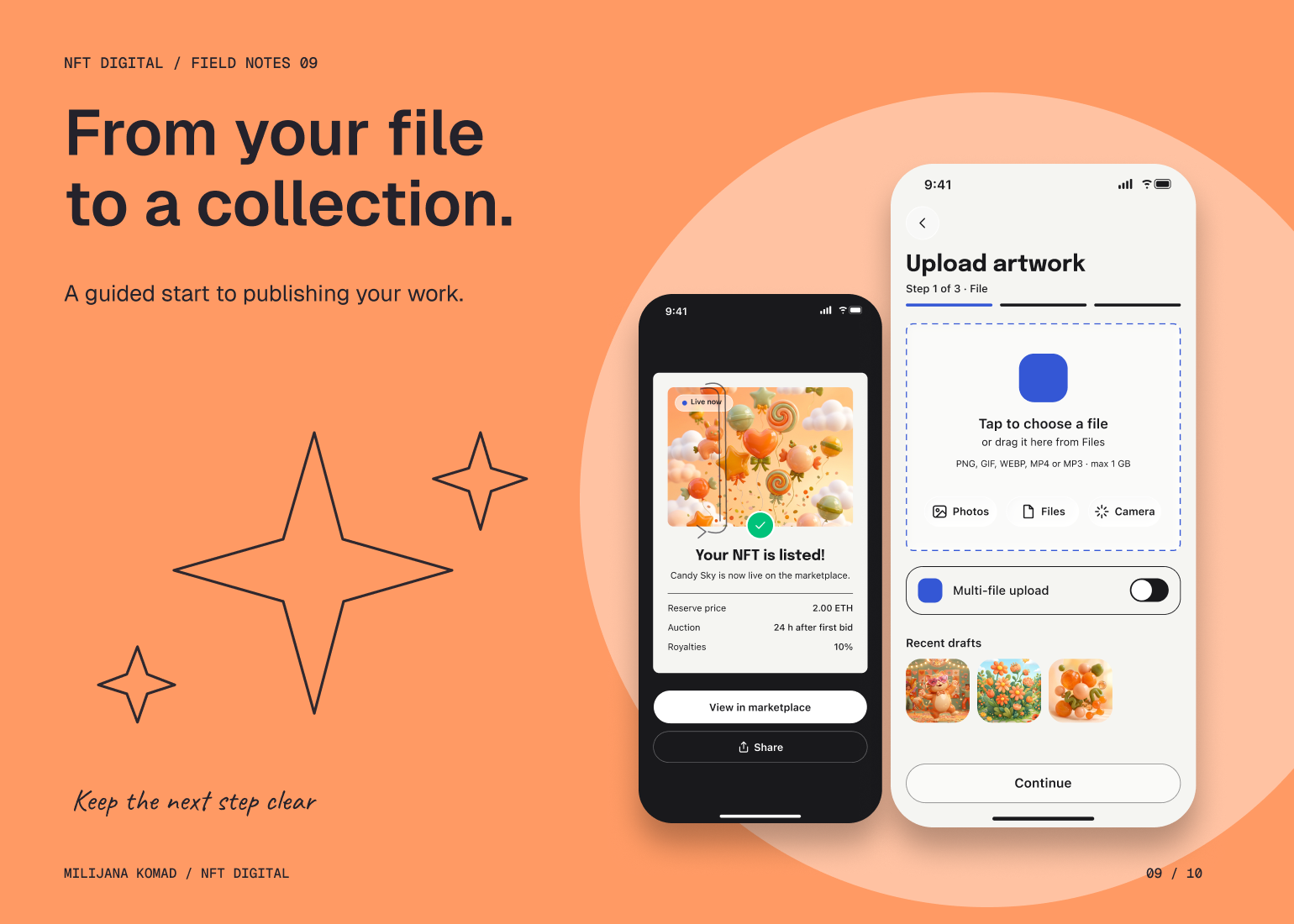
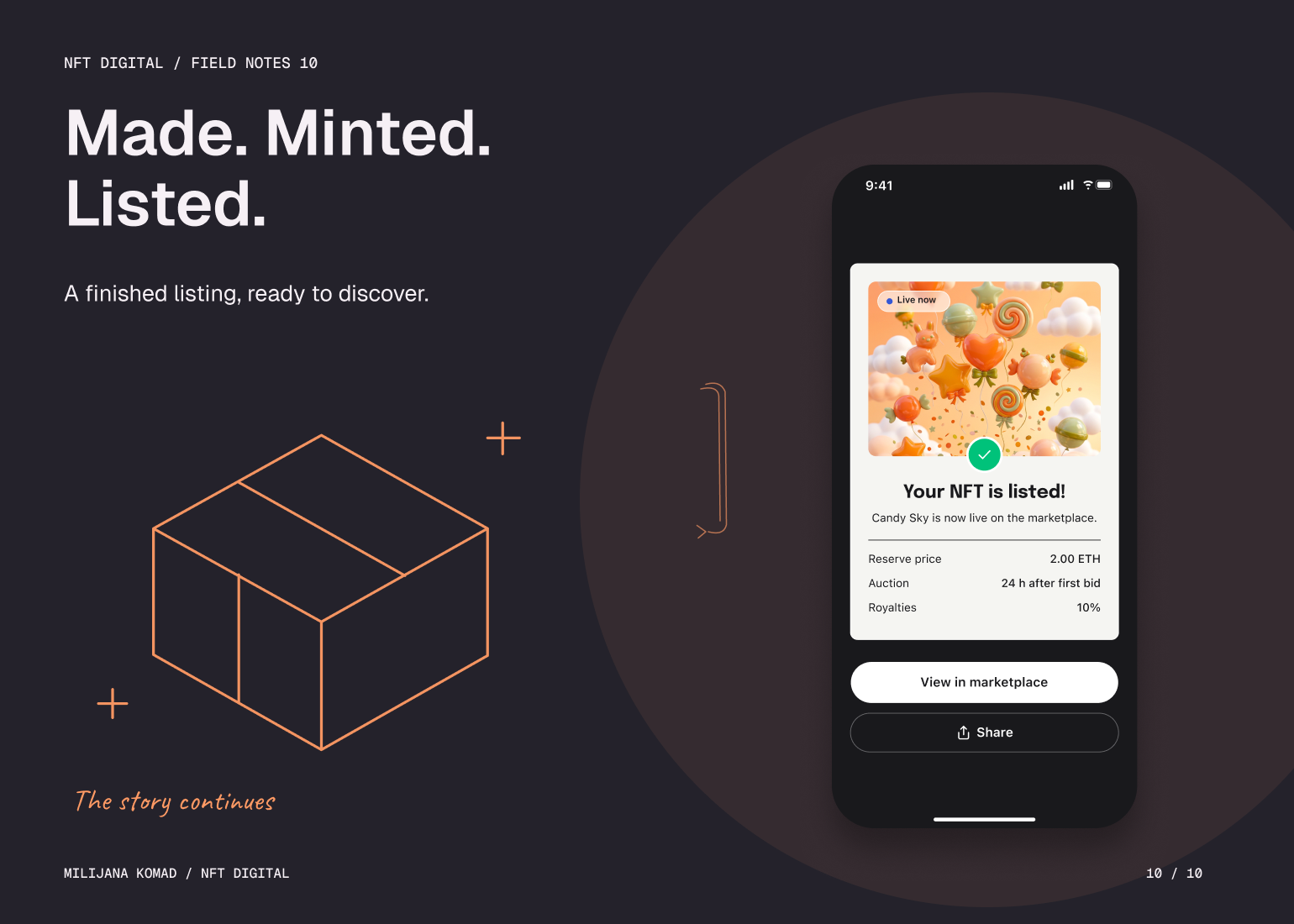
For creators, I organized publishing into a progression from file selection to description, pricing and listing confirmation. Fixed-price and auction choices sit where their consequences become relevant. Both sides share visual and navigation conventions, but their primary tasks remain distinct. My solution gives the marketplace a common foundation while protecting the different decisions collectors and creators need to make.