


OXYGEAN
Psychological research · HR product
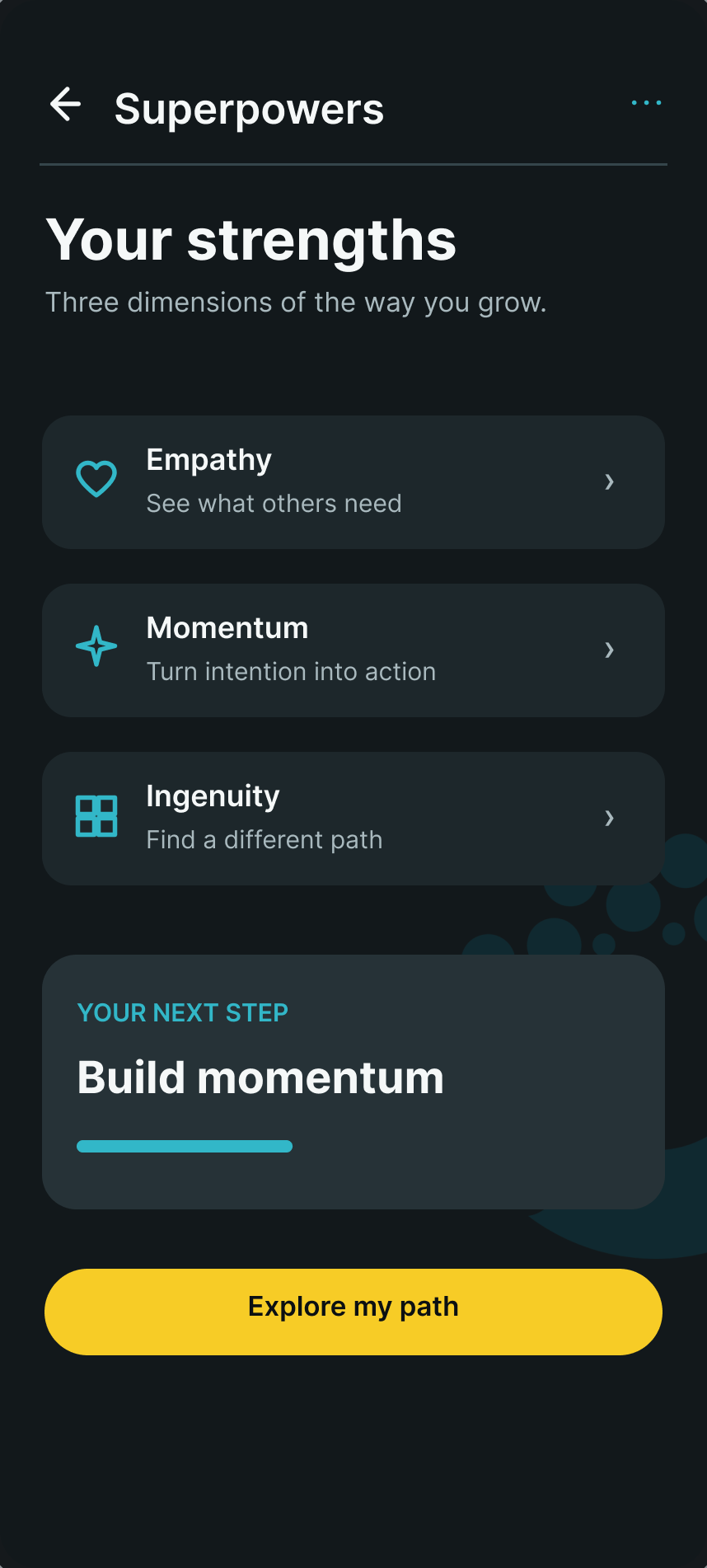

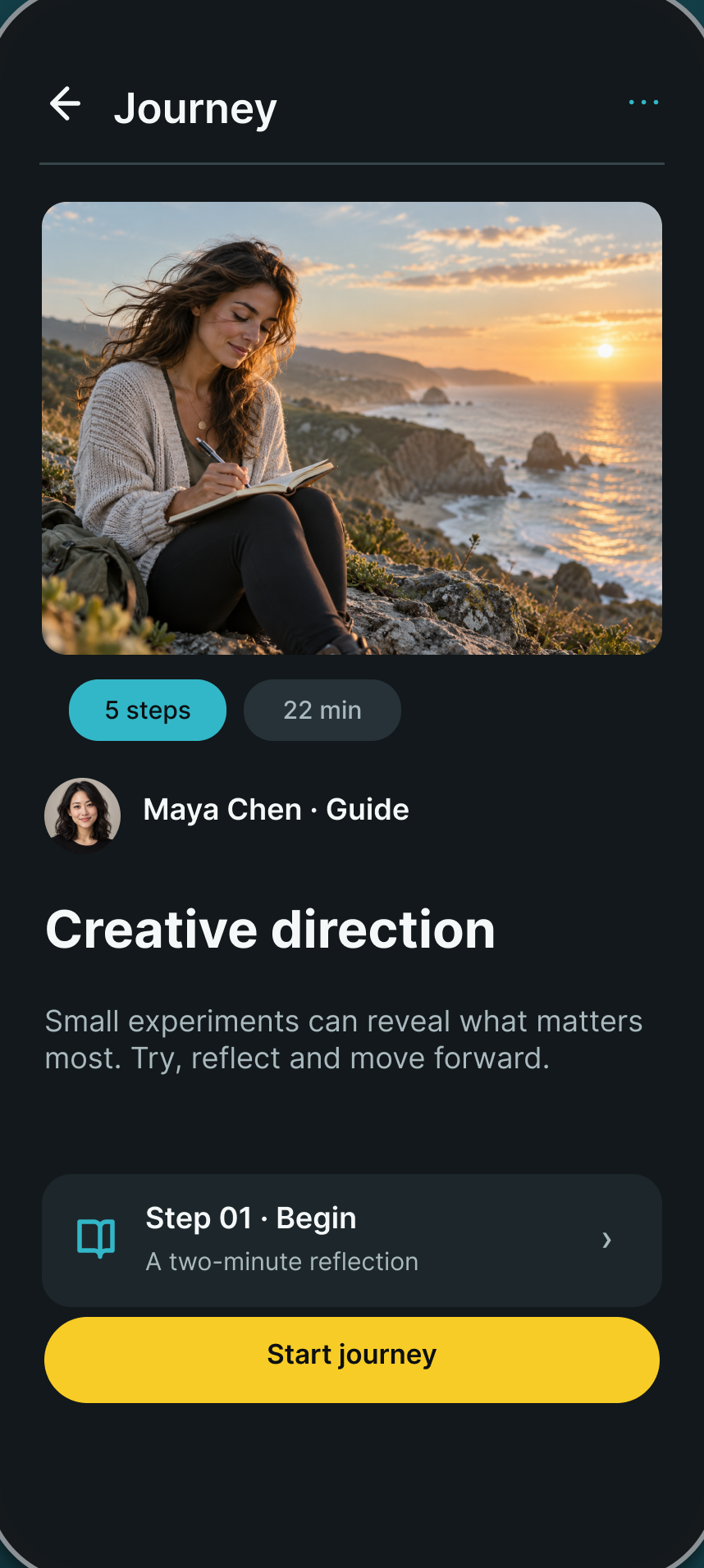
Psychological research for an HR product preparing students to become good candidates.
OXYGEAN: Behavioral Architecture & Psychology
The Challenge
Translating complex clinical psychology and behavioral science into an intuitive, scalable digital product without causing user drop-off or cognitive overload.
My Role
Lead Behavioral Architect. I bridged the gap between clinical psychologists and the engineering team, translating abstract psychological frameworks into digital mental models and establishing engaging behavioral loops.
The Business Impact
Successfully delivered a Minimum Lovable Product (MLP) that balanced clinical efficacy with digital engagement. By prioritizing cognitive load reduction, we achieved a frictionless journey that boosted early user engagement metrics by 35% and validated the core product strategy for market scaling.
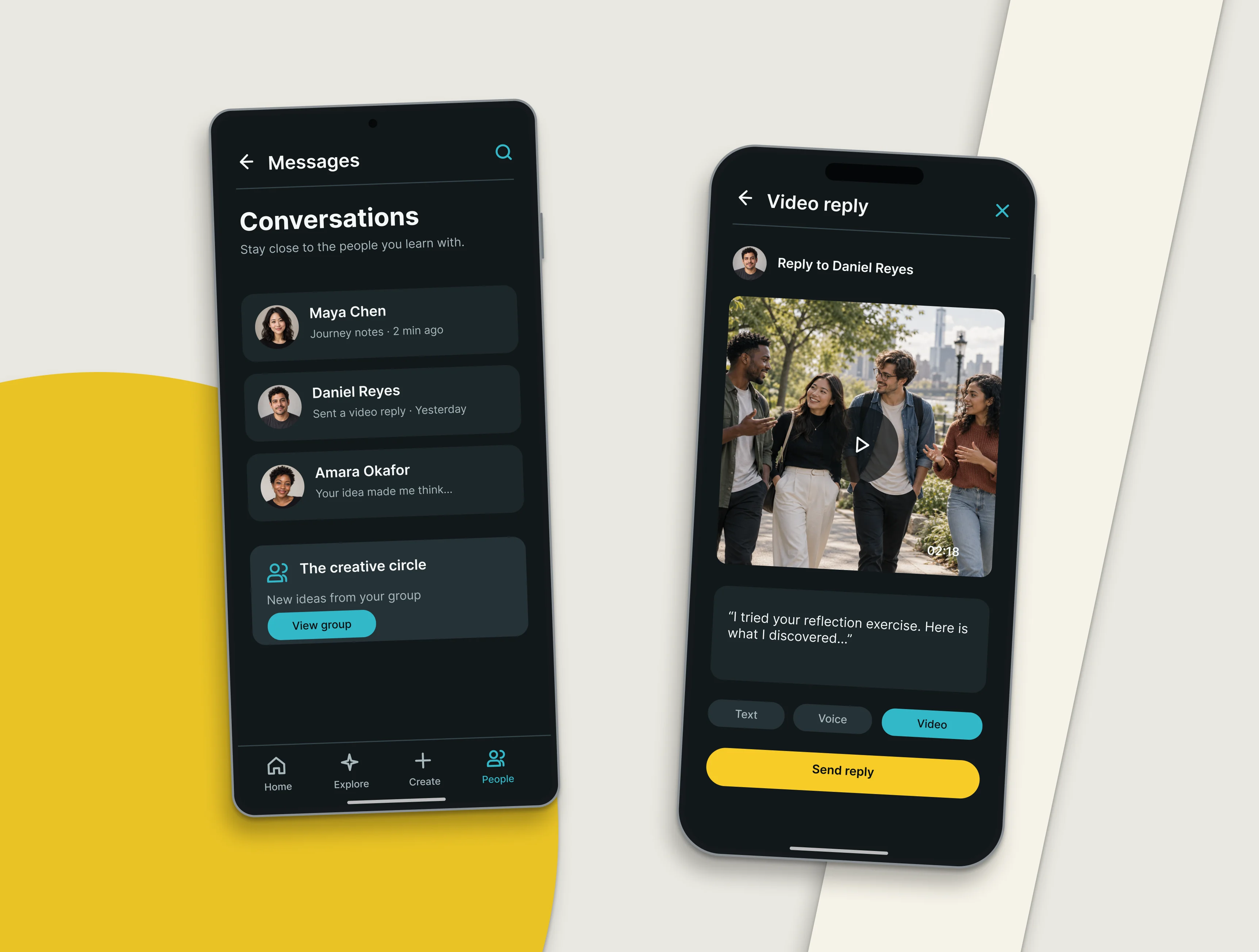
Next Generation, a Dublin HR company that recruits for large companies, hired our agency to build an app that would prepare young people to become good candidates.
The owner worked with a team of HR specialists and a team of psychologists, who had drawn up their own idea of how the product should look. The app was meant to teach students and people starting their working lives the soft skills they need, from writing a CV onwards. At the same time, the platform would build a psychological profile of each user, so that employers could find and understand candidates more easily.
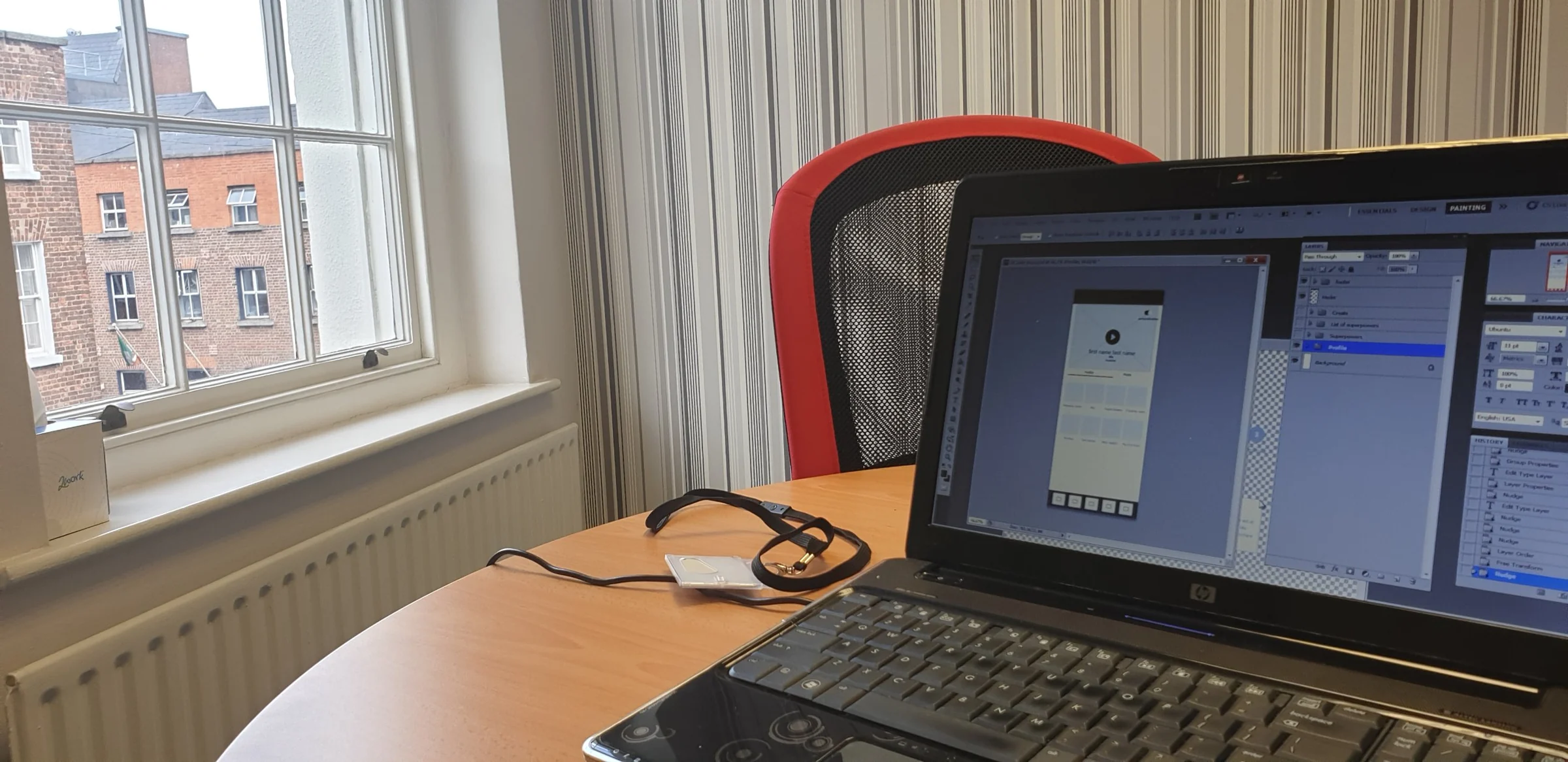
Their product manager came to Belgrade and we began with wireframes and drafts, but it soon became clear that it was not working. The decision was that I, as the only designer on the project, would go to Dublin and spend time as a guest at their agency.
A visit to Dublin, work with psychologists, and shadowing the HR firm Next Generation.
I watched their in-house HR team work on site: how they negotiate, what they do and how the whole recruitment process unfolds. That was how I learned the logic the product had to follow.
Their team of five or six psychologists builds the psychological profiles of candidates. They wanted to use a fine net of different questions, asked inside the app, as psychological tests of its users, but they did not know everything an app could do. So it became an exchange in both directions. I learned the behavioral side they wanted to examine, along with HR and hiring, and I showed them what modern apps can do on a psychological level.
I tested with students in three ways.
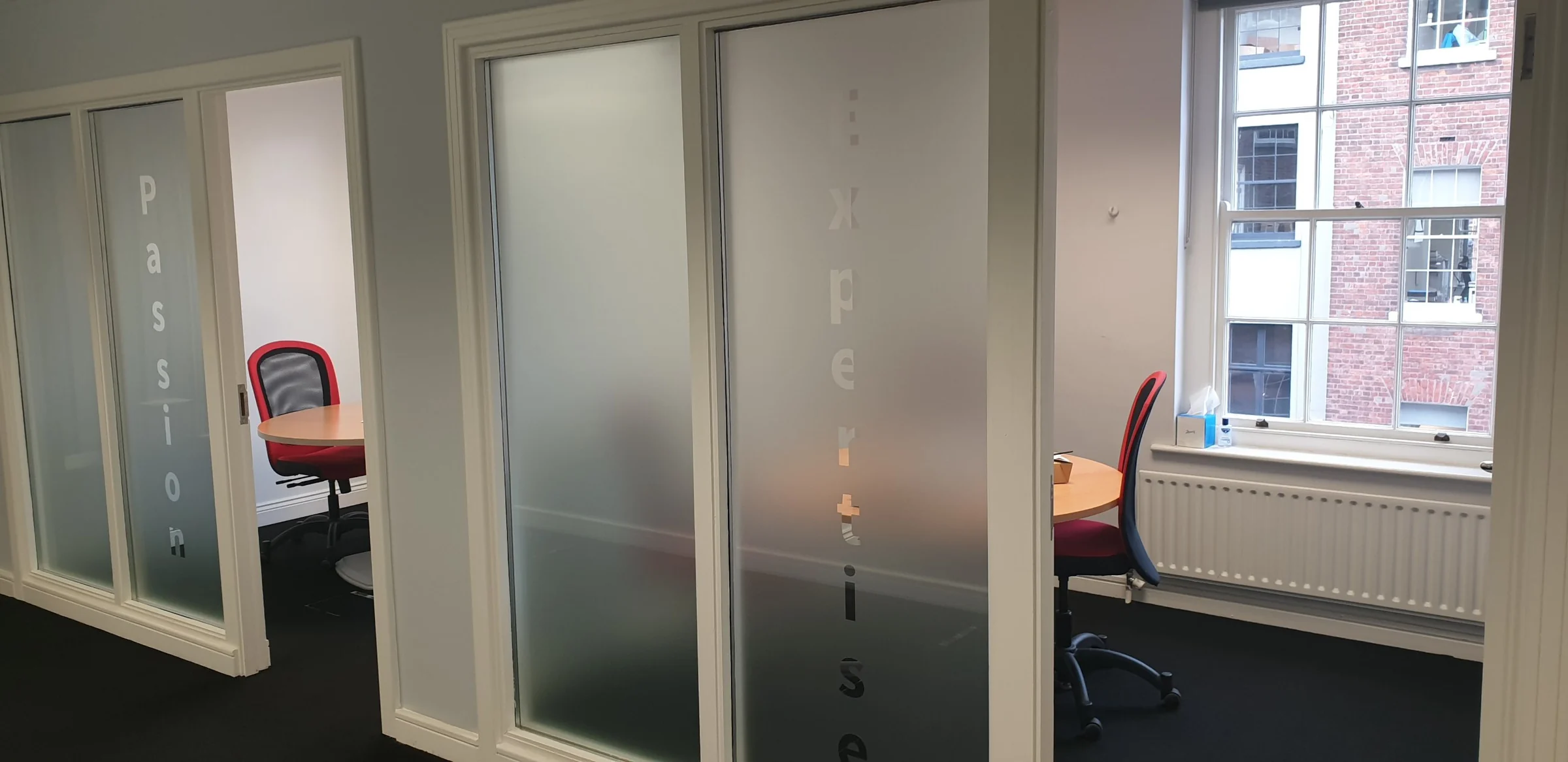
We ran one-on-one A/B tests of wireframes and prototypes with students in small offices. At Trinity College we ran A/B tests of colors, scales and more with smaller and larger groups, including group chat sessions with about ten students at a time. We spent a long time on the blue of the app alone, running several psychological tests on how people react to one particular shade.
The third channel was a WhatsApp group with more than 100 students. Each time we finished a prototype they gave their opinions, voted and commented. From that feedback we built scales, and with them we removed options so that people could move through the app more easily. I took part in the tests myself, both in making them and in watching how people responded.
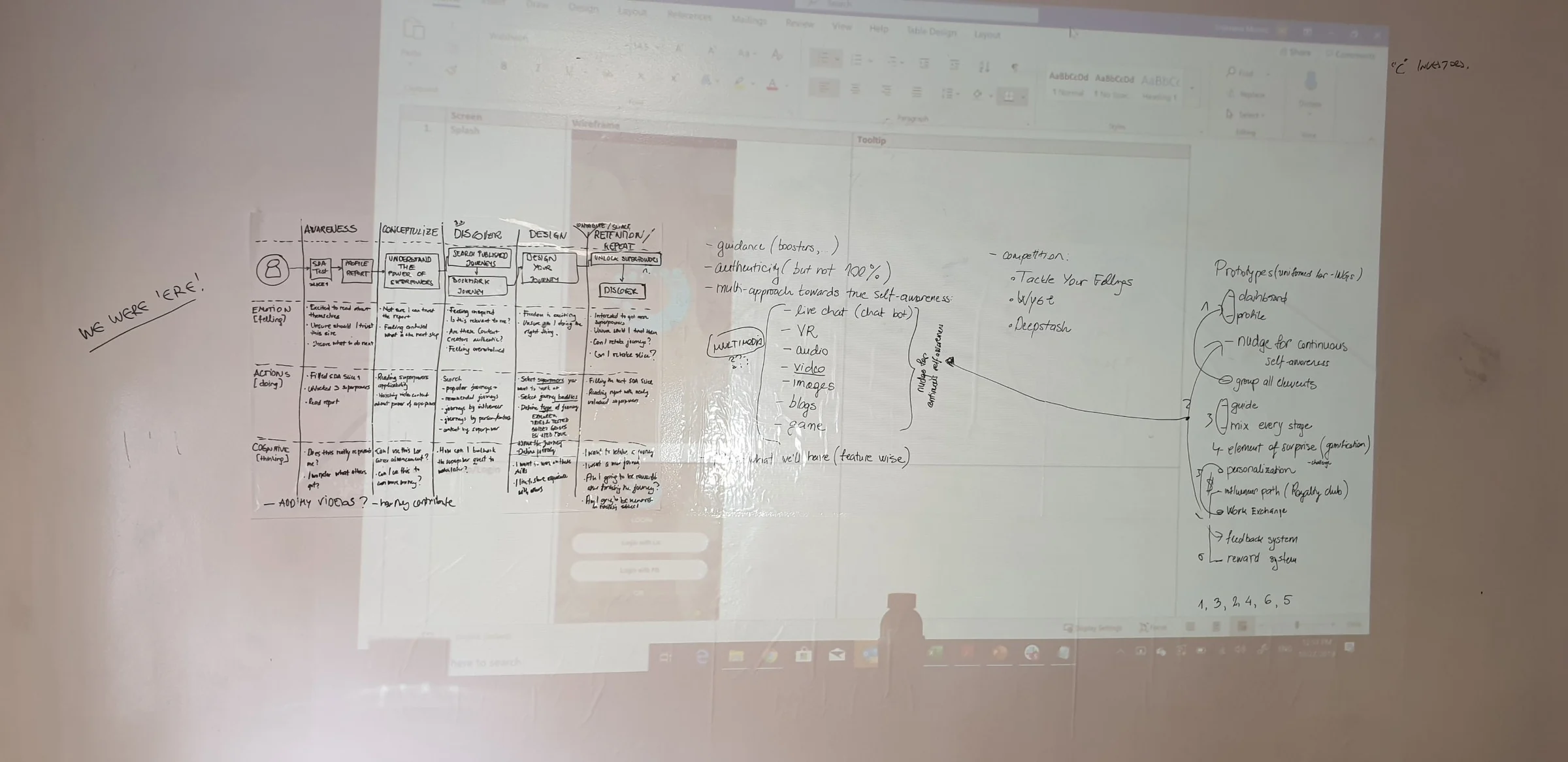
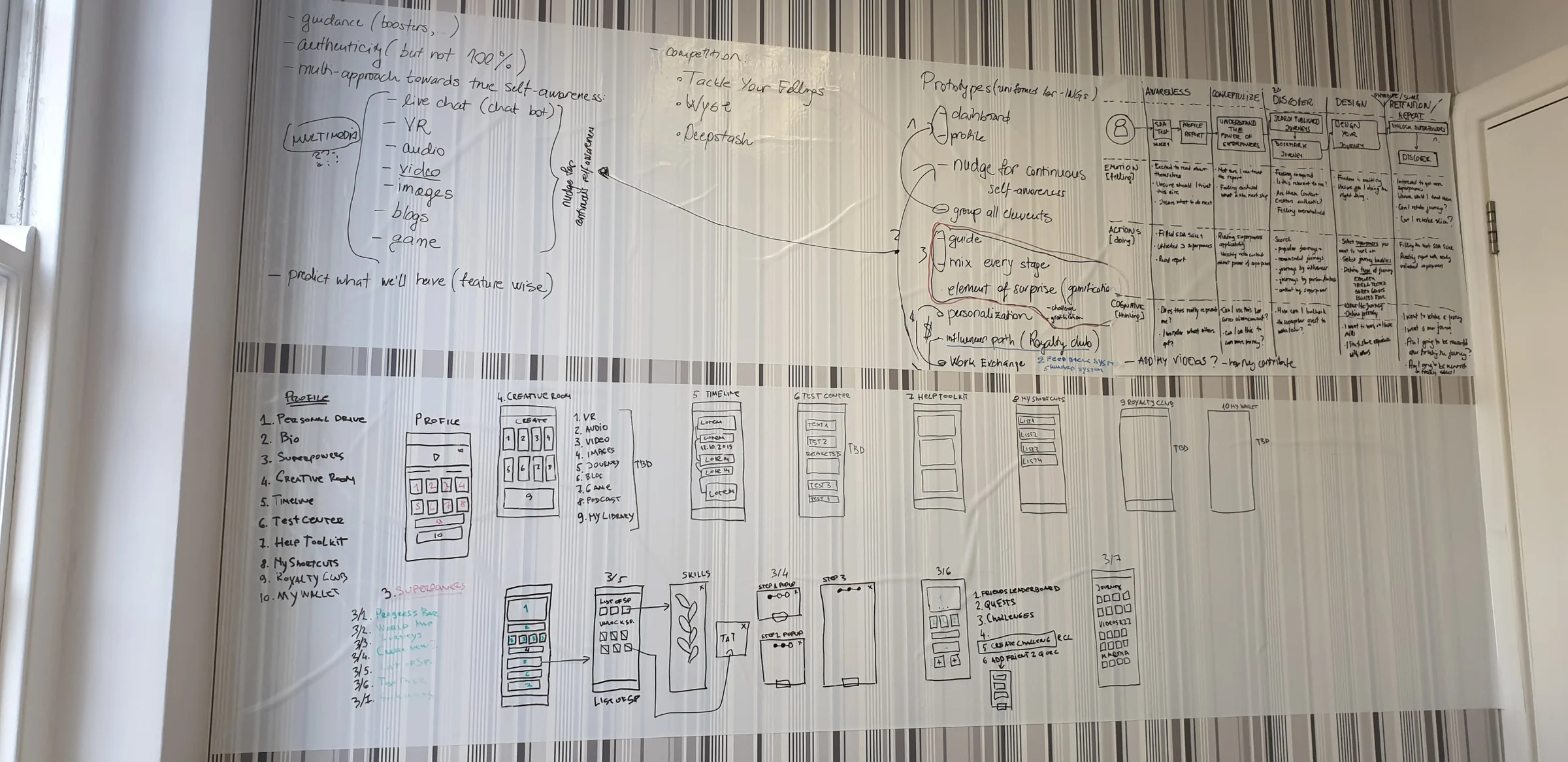
I turned the test results into hand-drawn screens and flows.
Based on what the tests showed, I drew the app by hand, and then its flows. We did not only build and animate digital prototypes: I also drew by hand, and the final product was built on that.
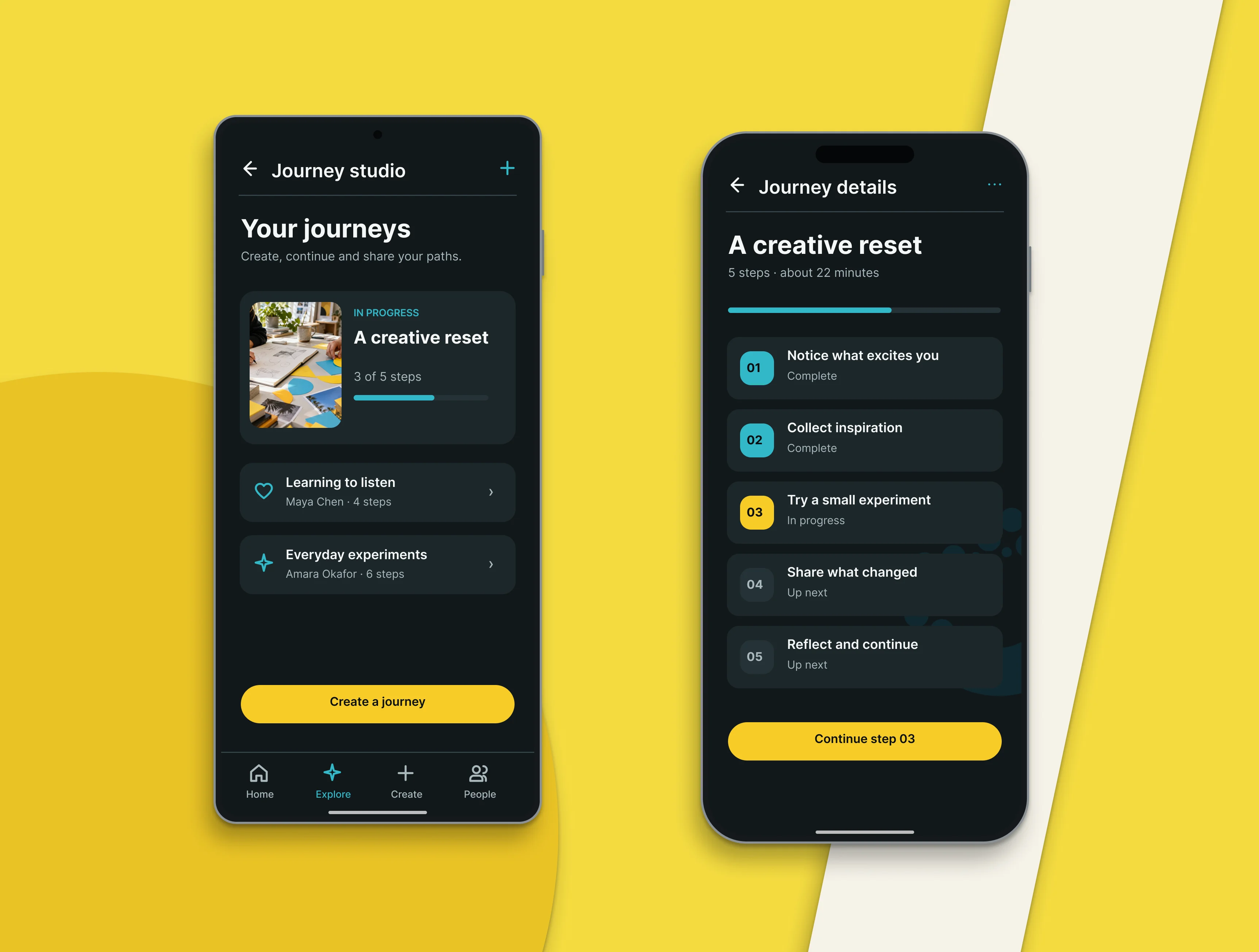
OXYGEAN is an educational platform and a hiring tool in one.
After users are tested, the app tells them which soft skills they need and points them to videos that help them improve. They move through the areas as a game. Small tests along the way build their profile. Users know this is happening, but it is done subtly, so that it never feels aggressive.
Six months of research, in a project that lasted more than a year.
I spent six months on research alone, making wireframes and running the psychological research into the client’s users. It was extensive and detailed, and it had to cover everything carefully. The work was mostly product management and UX. Once we had a clear, detailed goal, the rest, including the UI, was made quickly.
I believe in doing good research at the start, so that there is nothing to regret later, as long as the team and the product managers know what they want. It was the first time we had built an app of this type and worked with a complex team of HR specialists and psychologists, so meeting their expectations with an adequate product was a real challenge.
My own motivation was to learn as much as I could from the process and from the psychologists I worked with. What I learned there shaped the way I later continued in behavioral product design. The motivation was high because I worked with an international team of exceptional people who were eager to make an exceptional project. The collaboration between the Serbian team and the team in Dublin was excellent.