



The Art of Teasing Future Content in Video Game Design
 Milijana Komad / 10min
Keywords: Teasing Future Content, Video Gaming, Game Design, Player Engagement, Psychological Manipulation
Abstract:
This paper investigates the technique of teasing future content as a form of psychological manipulation used in video game design to maintain and enhance player engagement. We provide an in-depth exploration of this strategy’s implementation and implications through several illustrative case studies, offering a comprehensive overview from a product design viewpoint.
Introduction
In an increasingly competitive gaming landscape, companies employ various techniques to retain player interest over extended periods. One such method is the tease or hinting at future content, fostering a sense of anticipation and curiosity among players. This paper seeks to delve into this technique’s intricacies, its deployment in video game design, and its effects on player behaviour.
Teasing Future Content in Gaming: Conceptualization and Design
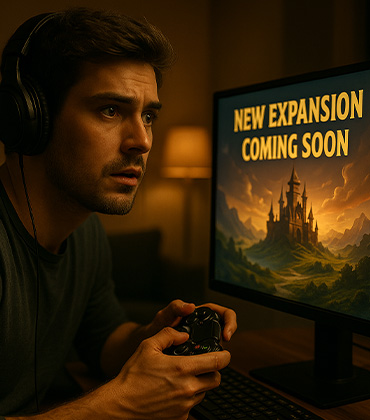
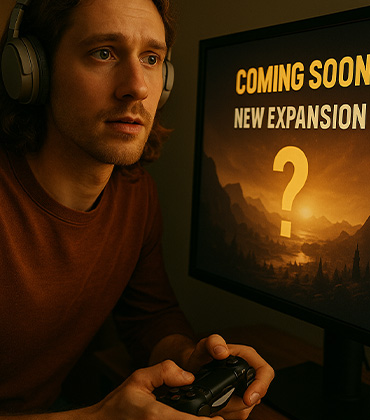
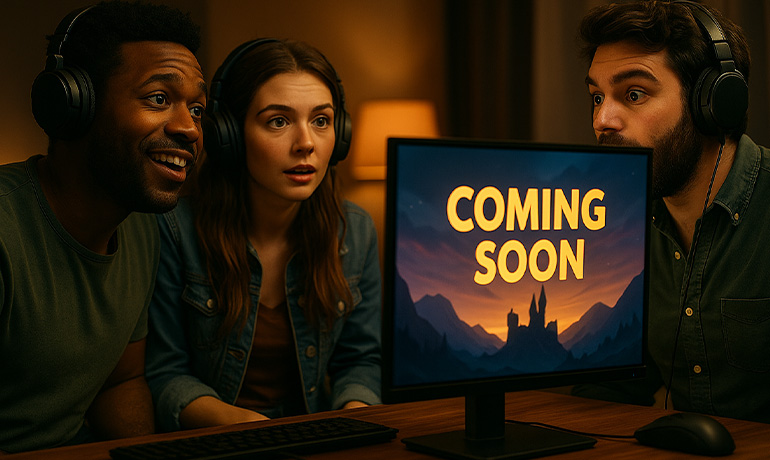
Teasing future content is a psychological strategy that exploits curiosity and anticipation, often creating a buzz around upcoming game features, levels, characters, or story developments. Game designers can implement these teases in numerous ways, from subtle in-game hints, trailers, or official announcements, to Easter eggs that hint at future developments.
“If nobody hates it, no one really loves it.”
Jessica Walsh
Case Study: Fortnite
Epic Games’ Fortnite is a prime example of effective content teasing. Every season of the game is preceded by a series of hints, clues, and events that foreshadow the upcoming theme. This strategy keeps the player base engaged, speculating about the future content, and eager to continue playing the game.
Case Study: World of Warcraft
Blizzard Entertainment’s World of Warcraft often utilizes the technique of teasing future content through its expansive narrative. In-game events, quests, and even non-player character dialogue can hint at future expansions, generating discussion and excitement within its player community.
Implications for Game Design
While teasing future content can effectively boost player engagement and game longevity, it’s important for game designers to manage player expectations carefully. Failure to deliver on the hype created by teases can lead to player disappointment and backlash. It’s crucial to balance the thrill of anticipation with the fulfilment of player expectations.
Conclusion
Teasing future content in video game design presents a fascinating method of piquing player interest and extending game lifespan. However, managing player expectations and delivering on the hype are critical aspects of this strategy. As the gaming industry continues to evolve, it will be insightful to see how game designers refine the art of the tease to create immersive, enduring gaming experiences.
References:
1. Balakrishnan, J., & Griffiths, M. D. (2017). An Exploratory Study of “Event Participation Suggestion” Systems in the Massive Multiplayer Online Role-Playing Game (MMORPG) Community. Games and Culture, 12(6), 559–585.
2. Burgun, K. (2012). Game design theory: A new philosophy for understanding games. CRC Press.
3. Crawford, G. (2004). Consuming sport: Fans, sport and culture. Routledge.
4. Epic Games. (2023). Fortnite. Retrieved from: https://www.epicgames.com/fortnite/
5. Gee, J. P. (2003). What video games have to teach us about learning and literacy. Computers in Entertainment (CIE), 1(1), 20.
6. Griffiths, M. D., Davies, M. N., & Chappell, D. (2003). Breaking the stereotype: The case of online gaming. CyberPsychology & Behavior, 6(1), 81–91.
7. Klimmt, C., Schmid, H., & Orthmann, J. (2009). Exploring the enjoyment of playing browser games. CyberPsychology & Behavior, 12(2), 231–234.
8. Marsh, T. (2011). Serious games continuum: Between games for purpose and experiential environments for purpose. Entertainment Computing, 2(2), 61–68.
9. Newman, J. (2004). Videogames. Psychology Press.
10. World of Warcraft. (2023). Retrieved from: https://worldofwarcraft.com/
11. Yee, N. (2006). The demographics, motivations, and derived experiences of users of massively multi-user online graphical environments. Presence: Teleoperators & Virtual Environments, 15(3), 309–329.





Related posts

Psychology / Design
Psychology / Design
The Role of Grinding in Video Game Design

Psychology / Design
Unpacking the Phenomenon of Loot Boxes in Video Game Design
DIGITAL DESIGN EXPERIENCE
MILIJANA KOMAD